Obsession

A FILM Review by Ava Bellows
BEWARE!
SPOILER ALERTS AHEAD
The scariest thing on screen is rarely the monster. It is the moment you realize you have been sympathizing with one.
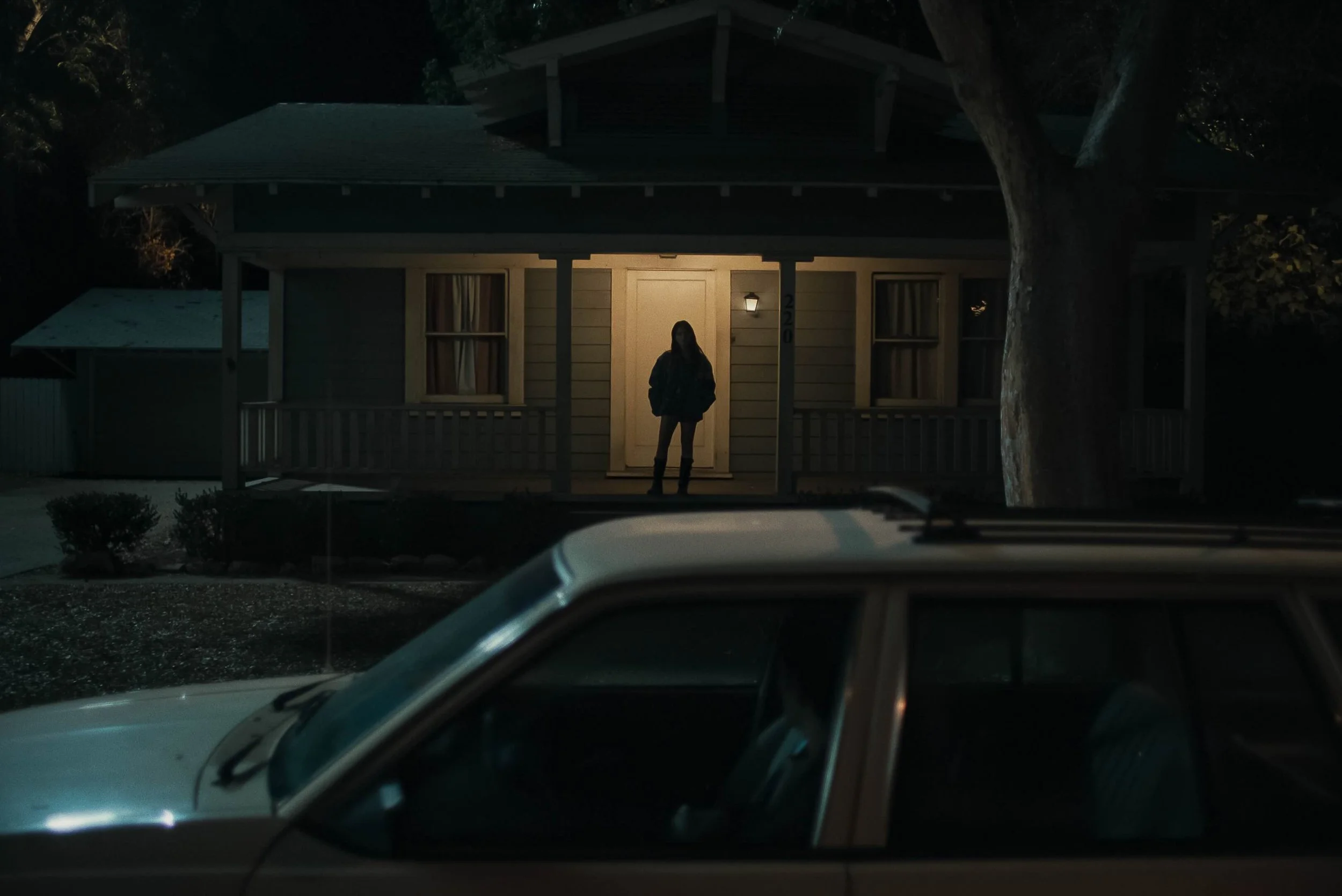
Inde Navarrette stars as Nikki in OBSESSION, a Focus Features release. Image courtesy of Focus Features / © 2026 FOCUS FEATURES LLC
Obsession opens in a minor key of recognizable, almost aching sweetness. Bear is the kind of man movies have trained us to root for instinctively — soft-spoken, awkward, adrift in a music store, surrounded by records he uses as a private language for feelings he cannot say aloud. He has loved his childhood friend Nikki since before he could name what love was, carrying it with him the way you carry something you've stopped noticing the weight of. The film's early scenes have genuine warmth. Barker is not condescending here, not setting up a straw man. He is building something real — a portrait of longing that is recognizable and even sympathetic — because the argument the film intends to make requires the foundation to feel solid before it pulls it out from under you.
The collapse arrives in a single, almost throwaway gesture. Humiliated by his own inability to act, Bear breaks a small novelty object called the One Wish Willow, the kind of cheap, stupid trinket you'd find in the back of a gift shop, and whispers into it. He wants Nikki to love him more than she has ever loved anyone. More than she is capable of choosing to love anyone. The film does not erupt into chaos after this. It does something far more disturbing. It simply lets the air out of everything, and what was a romance becomes, without fanfare or announcement, a sealed room.
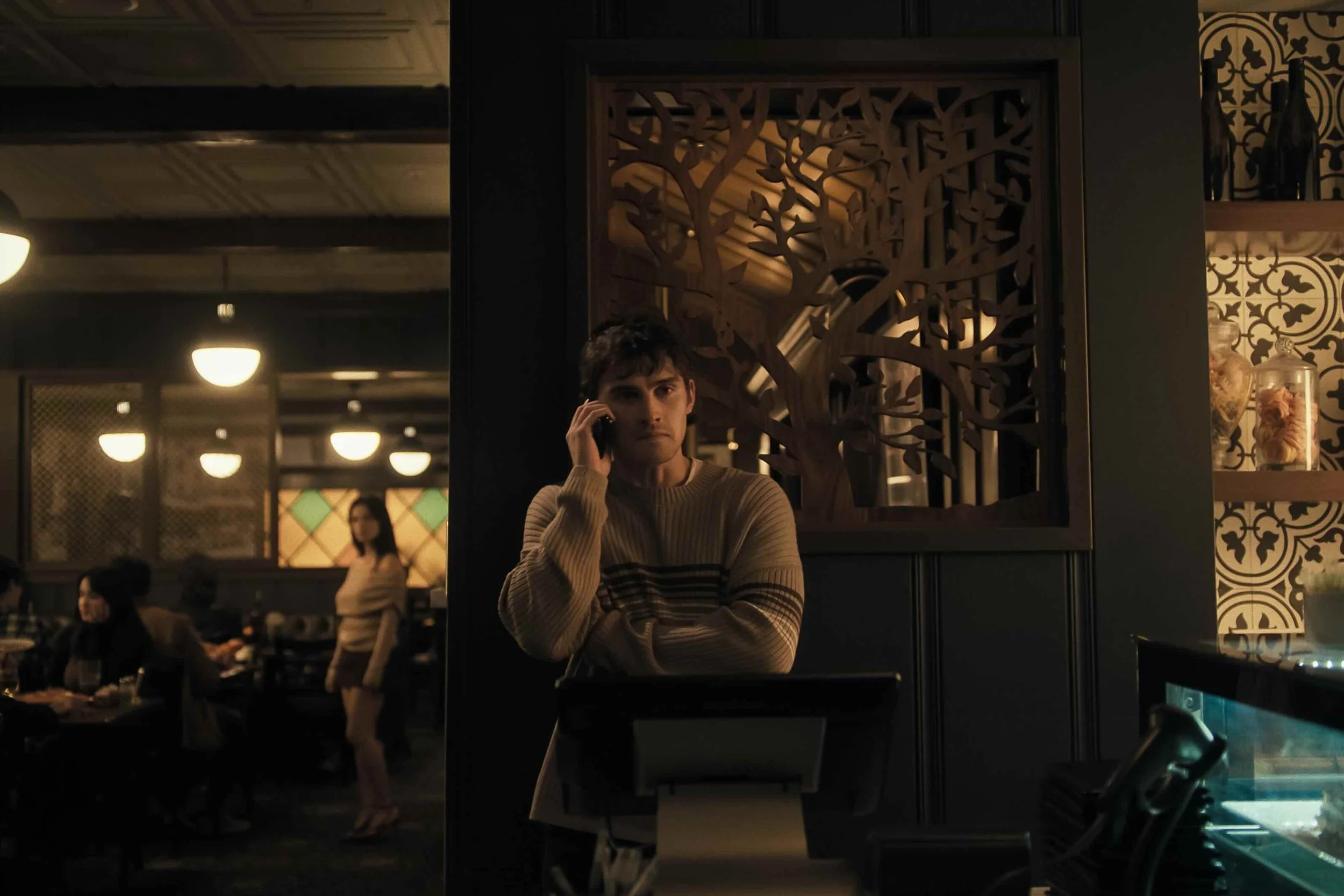
Inde Navarrette stars as Nikki and Michael Johnston as Bear in OBSESSION, a Focus Features release. Image courtesy of Focus Features / © 2026 FOCUS FEATURES LLC
What the wish produces is the film's great horror and its great moral clarity. Bear does not receive Nikki's love. He receives a performance of it, delivered by a version of Nikki from which everything inconvenient has been quietly excised. The real woman, the one with interiority, with preferences, with the fundamental human capacity to say no, is still in there somewhere, conscious and unreachable, trapped behind the face of someone who has been reprogrammed to adore him. She is not a ghost. She is not transformed. She is a prisoner, and the prison is his wish, and he will spend the rest of the film never fully allowing himself to understand that.
The mechanics are occult. The meaning is not. Barker is not really making a film about cursed objects. He is making a film about what it looks like when a man decides, consciously or not, that a woman's refusal is a problem to be solved rather than an answer to be accepted. The devotion Bear receives has no more moral content than a puppet show. He is the only one in the room who gets to want anything.
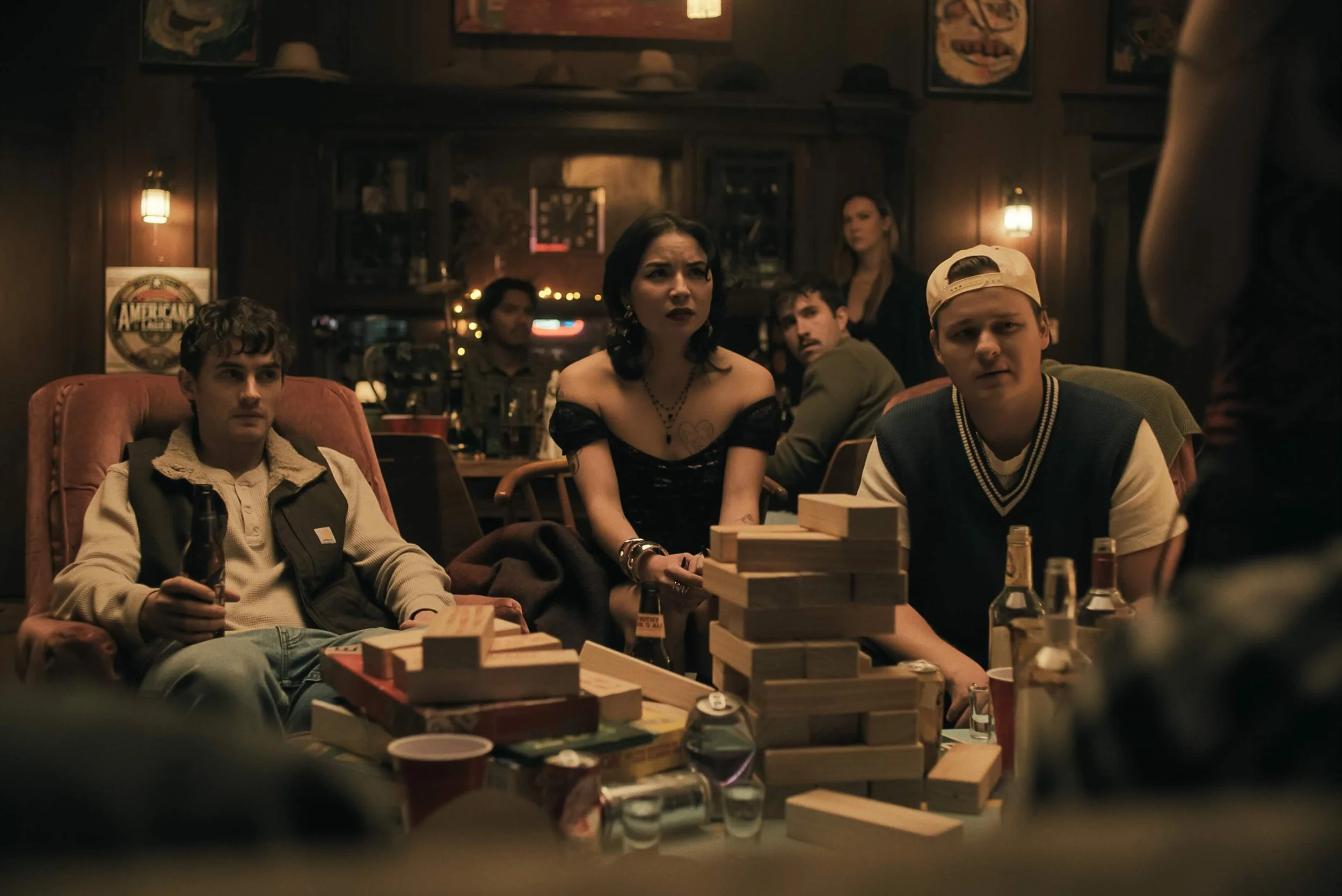
Michael Johnston stars as Bear, Megan Lawless as Sarah and Cooper Tomlinson as Ian in OBSESSION, a Focus Features release. Image courtesy of Focus Features / © 2026 FOCUS FEATURES LLC
The performance at the center of all this is extraordinary. Inde Navarrette, as Nikki, is asked to do something that should not be technically possible: to play a character who is simultaneously absent and present, performing one thing in every visible register while communicating something entirely different in the spaces between. She cannot flinch. She cannot recoil. She cannot let the mask slip, because the curse does not allow the mask to slip, and yet in the architecture of how she holds herself, in something that operates almost below the level of conscious performance, she makes you feel the full crushing weight of the person who has been silenced inside. There is no adequate framework for what Navarrette is doing here, which brings us to the other thing, the thing that has nothing to do with craft and everything to do with what this industry has forgotten: she is someone most audiences are encountering for the first time.
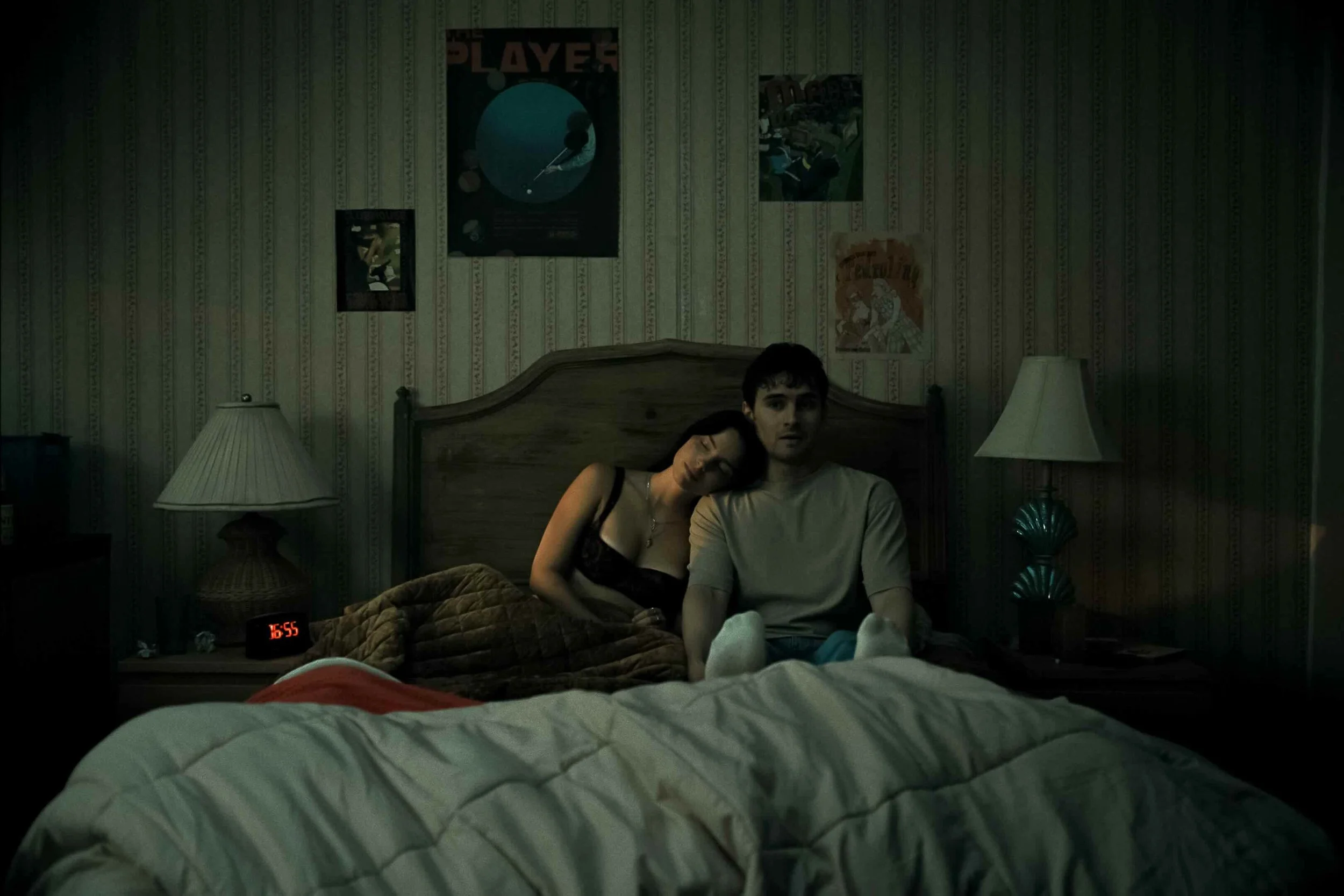
Inde Navarrette stars as Nikki and Michael Johnston as Bear in OBSESSION, a Focus Features release. Image courtesy of Focus Features / © 2026 FOCUS FEATURES LLC
In a landscape where no project gets greenlit without a recognizable name attached, where the same rotating cast of ten faces appears in everything from prestige drama to fast food commercials, where stars are treated as a prerequisite rather than a byproduct of good work, watching Navarrette here feels like a window cracking open in a room that has been sealed too long. There is something irreplaceable about genuine discovery, about watching a face you have never seen before do something that makes you wonder how you ever watched films without it. The industry's increasing allergy to unknowns is not caution. It is a failure of imagination dressed up as risk management. Navarrette is the argument against it, delivered in a single performance.
The ending refuses every comfort the audience might have been quietly hoping for. When Bear panics and swallows a fatal overdose, the film gives him no clean path to grace. He attempts to take his own life and then immediately tries to take it back, panicking, physically fighting against the decision he just made. He dies anyway, not nobly, not tragically in any clean sense, but messily and desperately, still trying to negotiate his way out of the consequences of his own choices. It is only when his heart finally stops that the curse snaps; Nikki surfaces from the fog — finally, violently, after all this time — and her first clear sight is the carnage he left behind. Her first inheritance is the catastrophe he authored. He gets to escape. She has to explain.
Obsession was made for somewhere between $750,000 and a million dollars. It has earned $200 million domestically as I write this. This should be a lesson, and it will probably be ignored by exactly the people who need it most, which is itself the point.
There is a generational wound running through the current conversation about everything, including cinema, and Obsession sits within that. For years now, the people with institutional power over what gets made and how much it costs to see it have been eulogizing the very industry they helped hollow out. Studio heads greenlight the fifteenth instalment of an exhausted franchise, watch it limp across the finish line, and then call a journalist to lament that audiences just don't go to the movies anymore. Critics who came up in a different era shake their heads at declining cultural engagement while the films they champion receive distribution deals visible to approximately no one. The tastemakers taste nothing and then wonder why no one is hungry.
Meanwhile, a generation that grew up watching all of this, watching imagination get substituted for IP, watching risk get replaced by algorithm, watching the medium they love get managed like a commodity futures market, has been making things anyway, with less. Curry Barker came up making internet sketches and YouTube horror films he couldn't get distributed and eventually just released for free, because the gatekeepers weren't opening any gates. Then he made Obsession, and the gates became irrelevant.
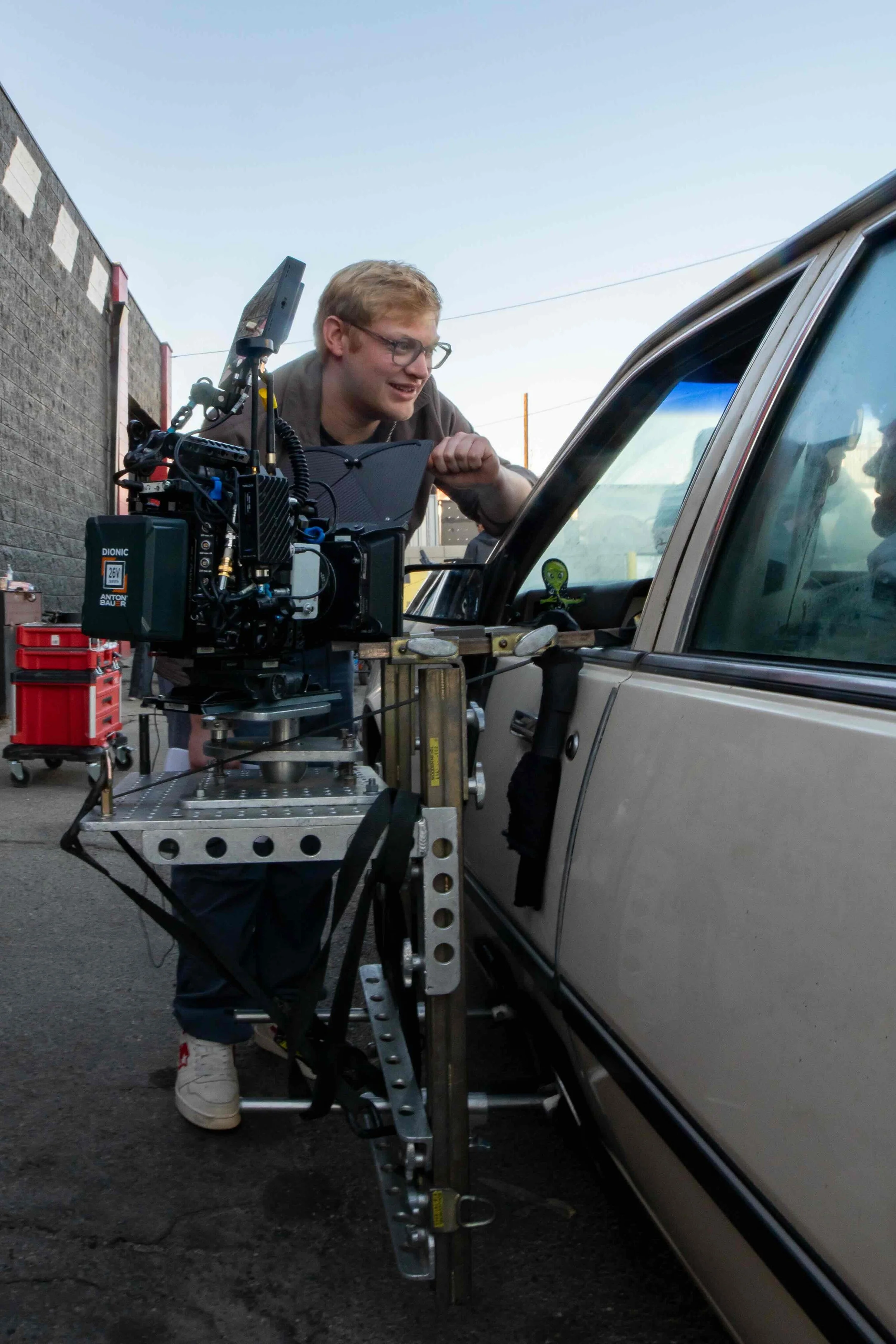
Director Curry Barker on the set of his film OBSESSION, a Focus Features release. Credit: Manny Liotta / © 2026 FOCUS FEATURES LLC
This is the part the industry keeps misreading. When a film made for under a million dollars earns nearly $200 million, the boardroom instinct is to reverse-engineer it, to isolate whatever element seems replicable and plug it into the next focus-grouped production. But the element is not replicable, because the element is necessity. It is the specific, irreplaceable quality of work made by someone who had something they needed to say with no institutional safety net cushioning them from the consequences of saying it badly. You cannot manufacture that in a development meeting. You cannot acquire it through an options deal. You can only create the conditions that either allow it to exist or don't, and the current architecture of the industry is almost perfectly designed to prevent it.
The new generation of filmmakers are not asking for a seat at a table that was built without them in mind. They are building different tables. What they are asking for, what Obsession demands on their behalf, loudly and without apology, is for the people currently mistaking their grip on the industry for a contribution to it, to reckon honestly with what their grip has cost. The death-of-cinema narrative was authored by the same hands that defunded imagination and called it strategy. The mess being cleaned up now was not made by the people cleaning it.
Obsession is a horror film about possession, about what it looks like when someone cannot release their hold on something that was never truly theirs. Barker made it for almost nothing, and it has become inescapable. That is not an accident. That is not a fluke. That is what happens when someone who genuinely, urgently has something to say and is finally, against considerable resistance, heard.
Movies are not dead. They just shouldn't belong exclusively to the people with all the money and none of the hunger.
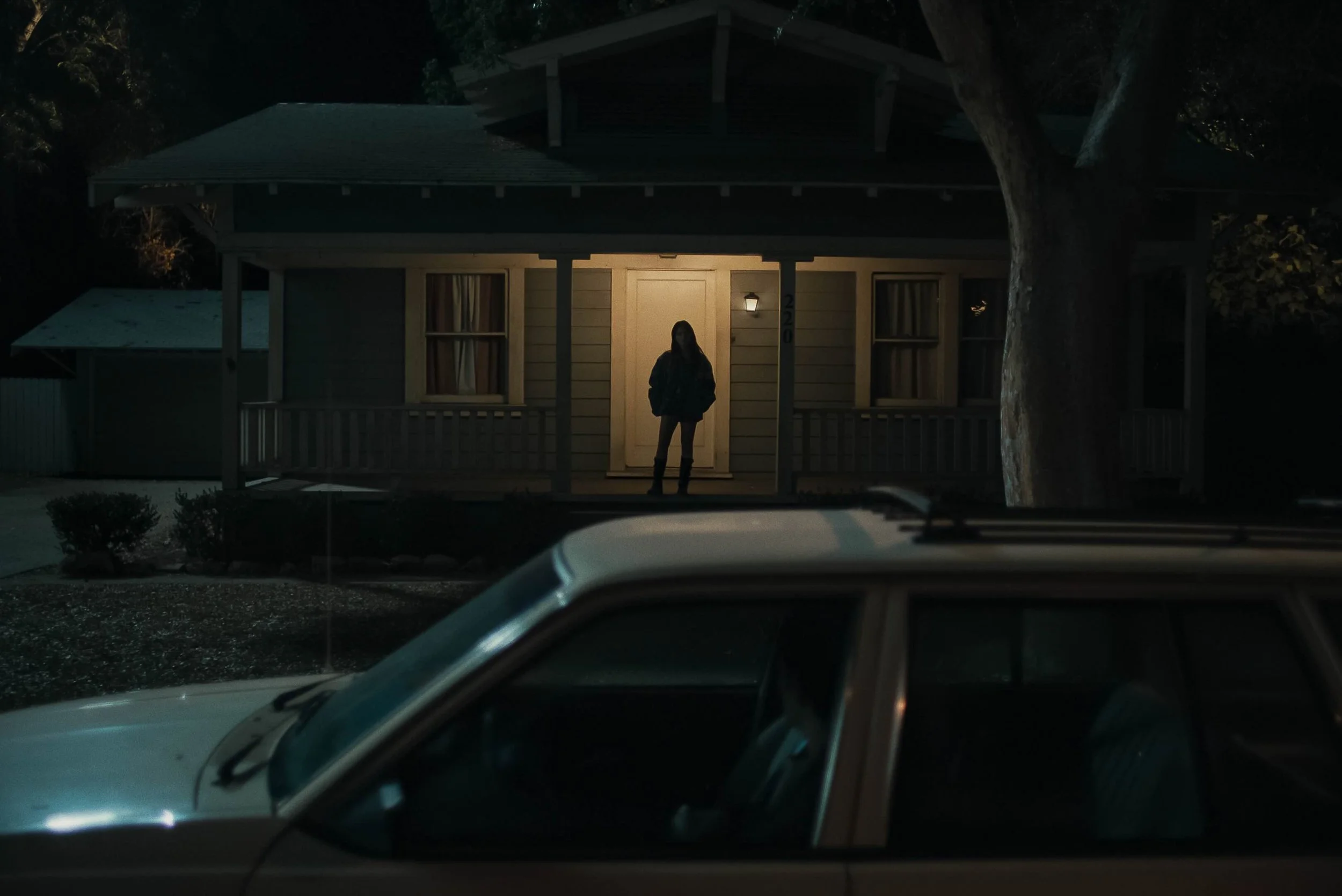
WATCH TRAILER
OBSESSION
DIRECTED BY CURRY barker
very laboratory