Jay Kelly

A Review by Ava Bellows
Jay Kelly. George Clooney Photo by Peter Mountain/Netflix/Peter Mountain/Netflix - © 2025 Netflix, Inc.
Jay Kelly
A review
by Ava Bellows
Noah Baumbach’s Jay Kelly begins with a warning disguised as a confession in the words of Sylvia Plath: “It’s a hell of a responsibility to be yourself. It’s much easier to be somebody else or nobody at all.” The film takes that dare seriously—sometimes painfully, sometimes tenderly—and becomes one of Baumbach’s most searching examinations of identity, fame, and the stories we build to survive.
It helps that the person carrying this burden is George Clooney, whose star persona becomes both the text and the subtext of the film. He is our last old-fashioned Movie Star, the kind who arrives on screen already carrying history, glamour, and a thousand versions of who the world imagines him to be. Baumbach uses that glow not to flatter him but to illuminate the man underneath, the one who’s been squinting against the brightness for decades.

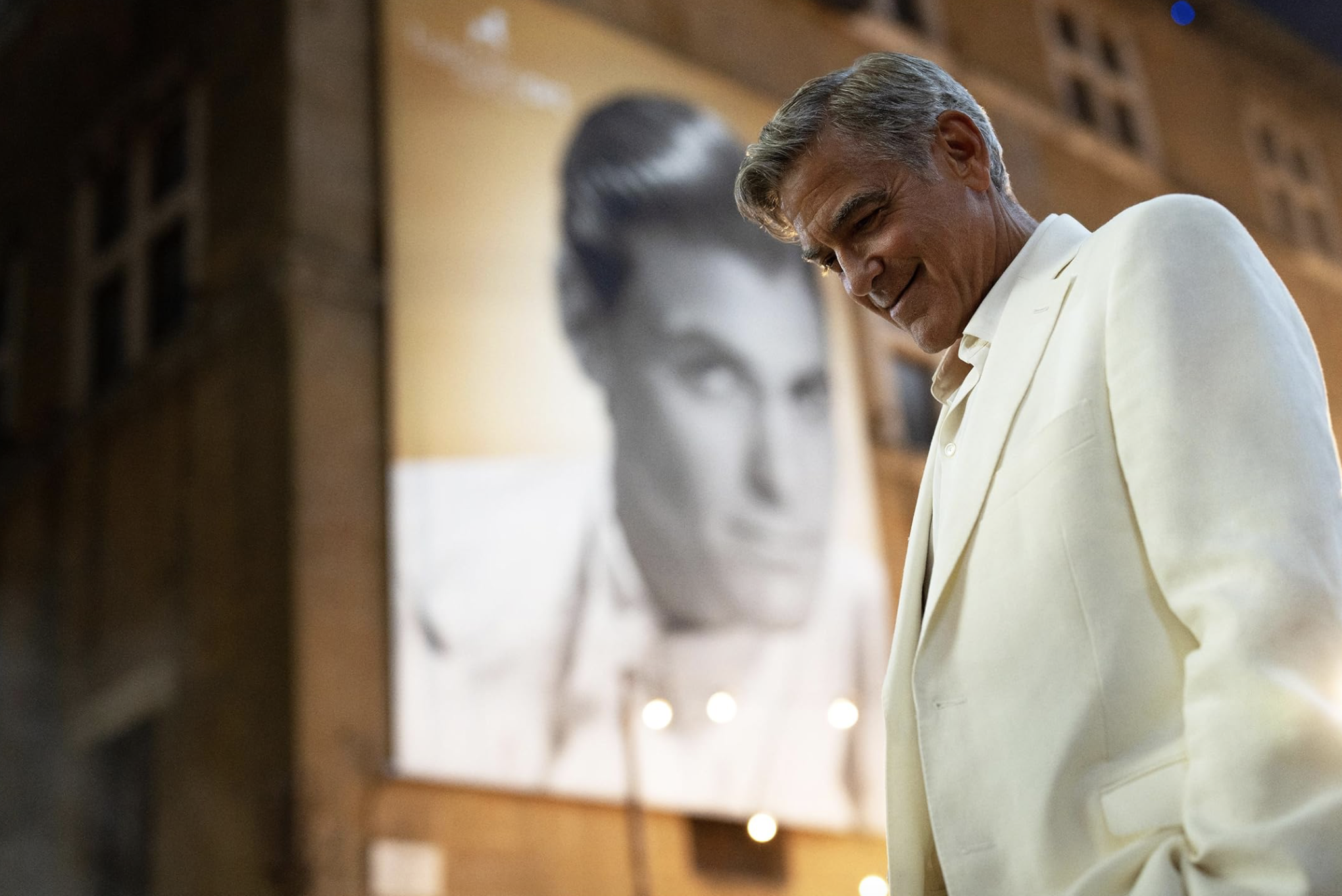
George Clooney in Jay Kelly Photo by Peter Mountain/Netflix/Peter Mountain/Netflix - © 2025 Netflix, Inc.
Clooney plays Jay with bewildered charm—someone who knows how to be adored but not how to be known. He’s surrounded by a small army who keep his world spinning: an assistant who anticipates his needs, a makeup artist who maintains the legend, the untouched slice of cheesecake from his rider. Fame has become his natural habitat; everything outside of it feels slightly unreal, like an underlit set. Watching him fumble attempts at sincerity—especially with his daughters—is one of the story’s quiet heartbreaks. Jay is not a monstrous father, just a deeply human one, and Clooney plays him with a tenderness so unguarded it nearly startles.
Around him is a broad, bustling ensemble, vividly sketched and orbiting Jay’s celebrity like their own constellation.

Billy Crudup in Jay Kelly. Photo by Peter Mountain/Netflix/Peter Mountain/Netflix - © 2025 Netflix, Inc.
Billy Crudup delivers one of the film’s most affecting performances as a figure from Jay’s past—part rival, part shadow, part unspoken truth-teller. He enters like a half-remembered dream and gradually becomes the film’s moral counterweight; in a movie concerned with self-delusion and narrative rewriting, Crudup gives us the character least willing to let Jay escape into the myth of himself. His scenes with Clooney crackle not with confrontation but with the ache of two men recognizing the versions of themselves they never became.
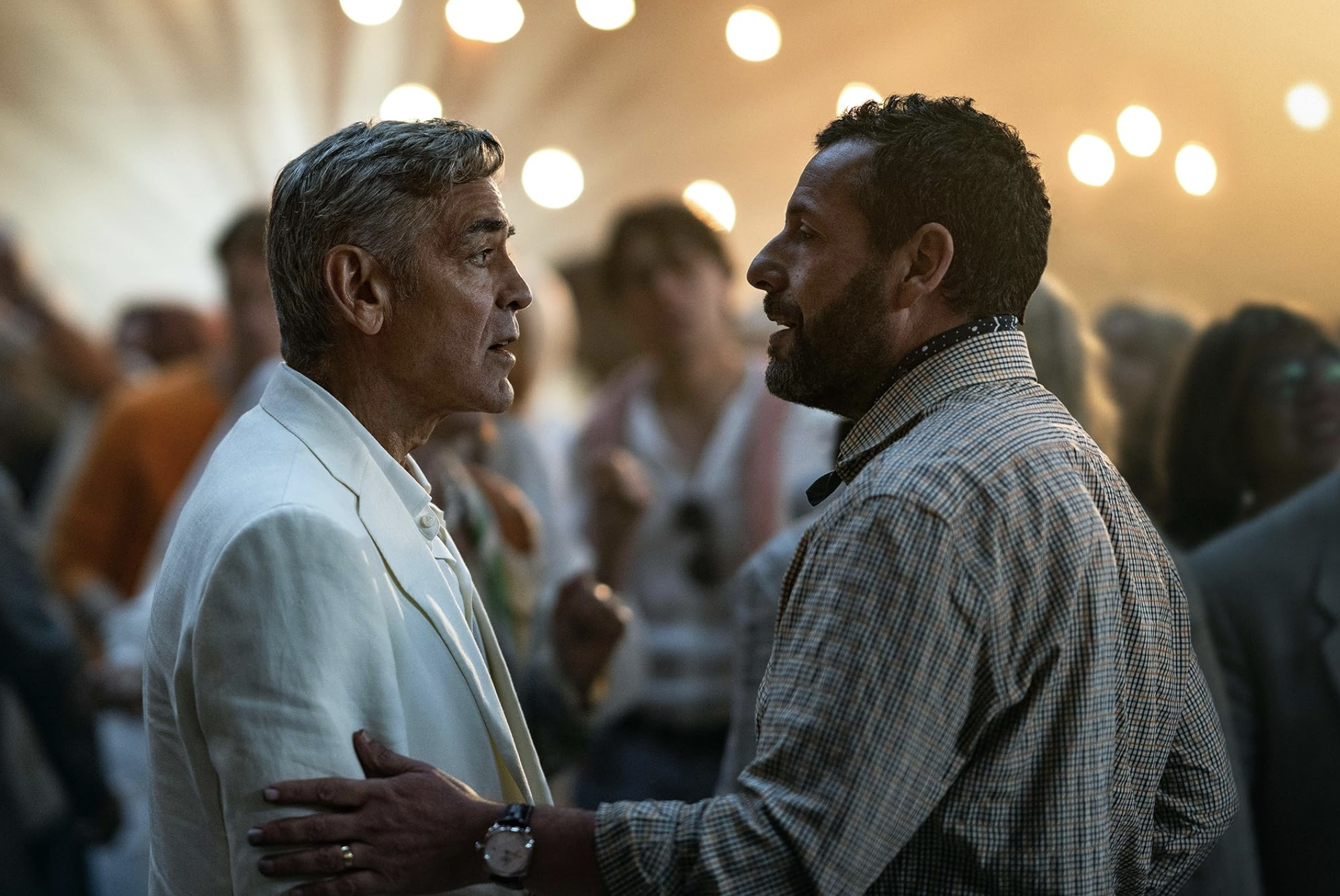
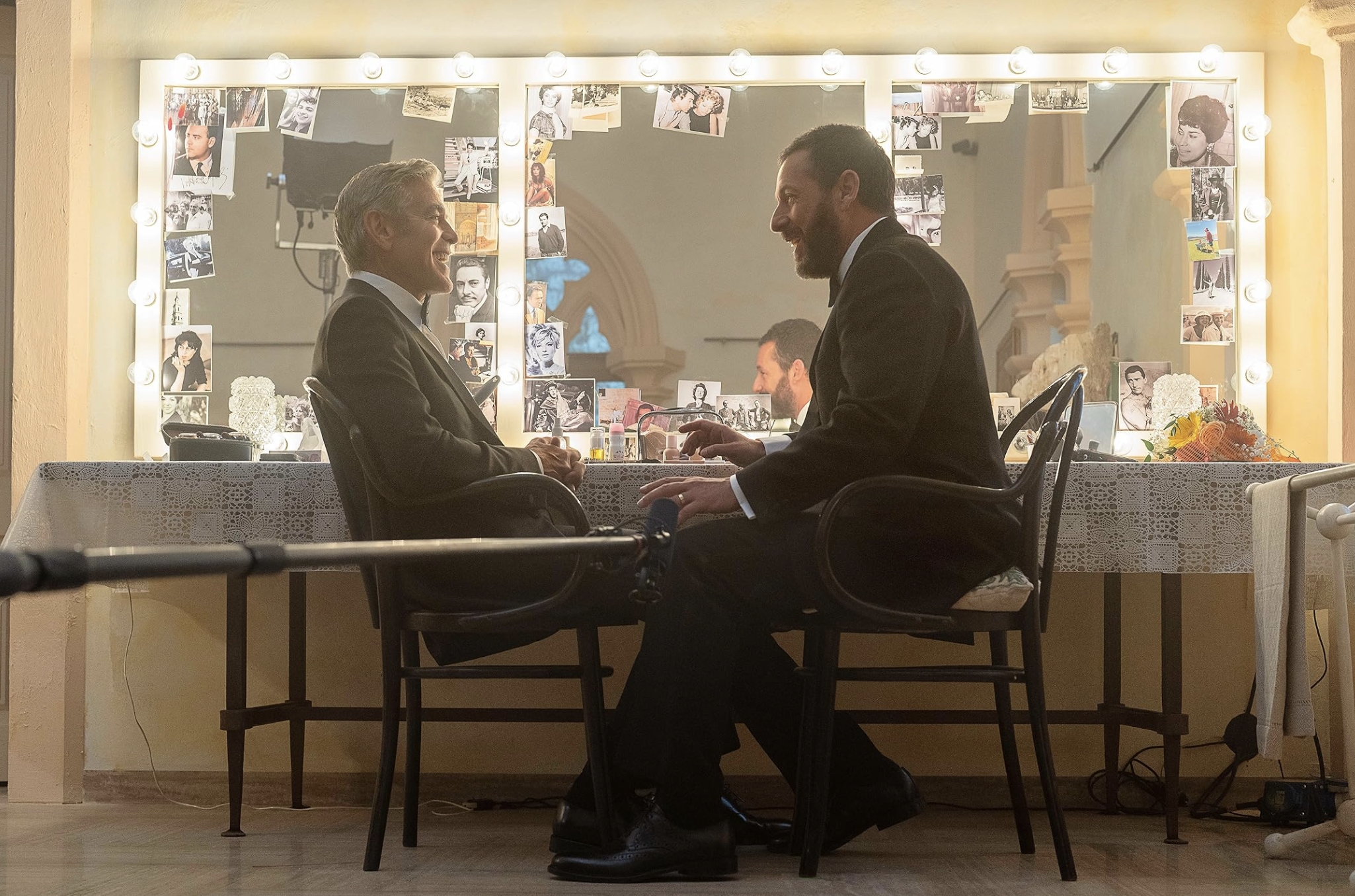
George Clooney and Adam Sandler in Jay Kelly Photo by Peter Mountain/Netflix/Peter Mountain/Netflix - © 2025 Netflix, Inc.
Adam Sandler is the film’s warmest presence—Jay’s manager, confidant, caretaker, and friend. He plays the role with that quietly glowing heart he reveals once every few years. Sandler’s character is a father to his own children while also, in many ways, parenting a movie star who never learned to do anything alone. His tenderness sneaks up on you, especially in the way he steadies Jay’s life through small, practical mercies: fetching water, shading eyebrows, soothing nerves. His scenes with Clooney have the comfort of decades lived together—affection and exasperation sharing the same breath.
The film glides between present and memory the way thought does—without permission or announcement. Jay drifts through the timelines of his life, searching for the place where he set down the real version of himself and forgot to pick it back up.
All of this—the fame, the glow, the entourage, the drift—funnels into the part of the film that breaks your heart the deepest: his daughters.
One is newly free, heading to Europe in that wide-open, trembling way that only happens once. Jay panics and gathers his troupe to follow her, hoping for one perfect moment before she steps fully into her own life, a life he hasn’t been present in for years. The chase is sad, sweet, and slightly funny—a man who can command a film set unable to simply be with his child.
The older daughter—the one who grew up in the shadow of Jay Kelly the Movie Star but not Jay Kelly the Dad—carries a heavier, sharper ache. She knows the version the world gets. She knows the version she hoped for. She’s learned not to expect them to match.
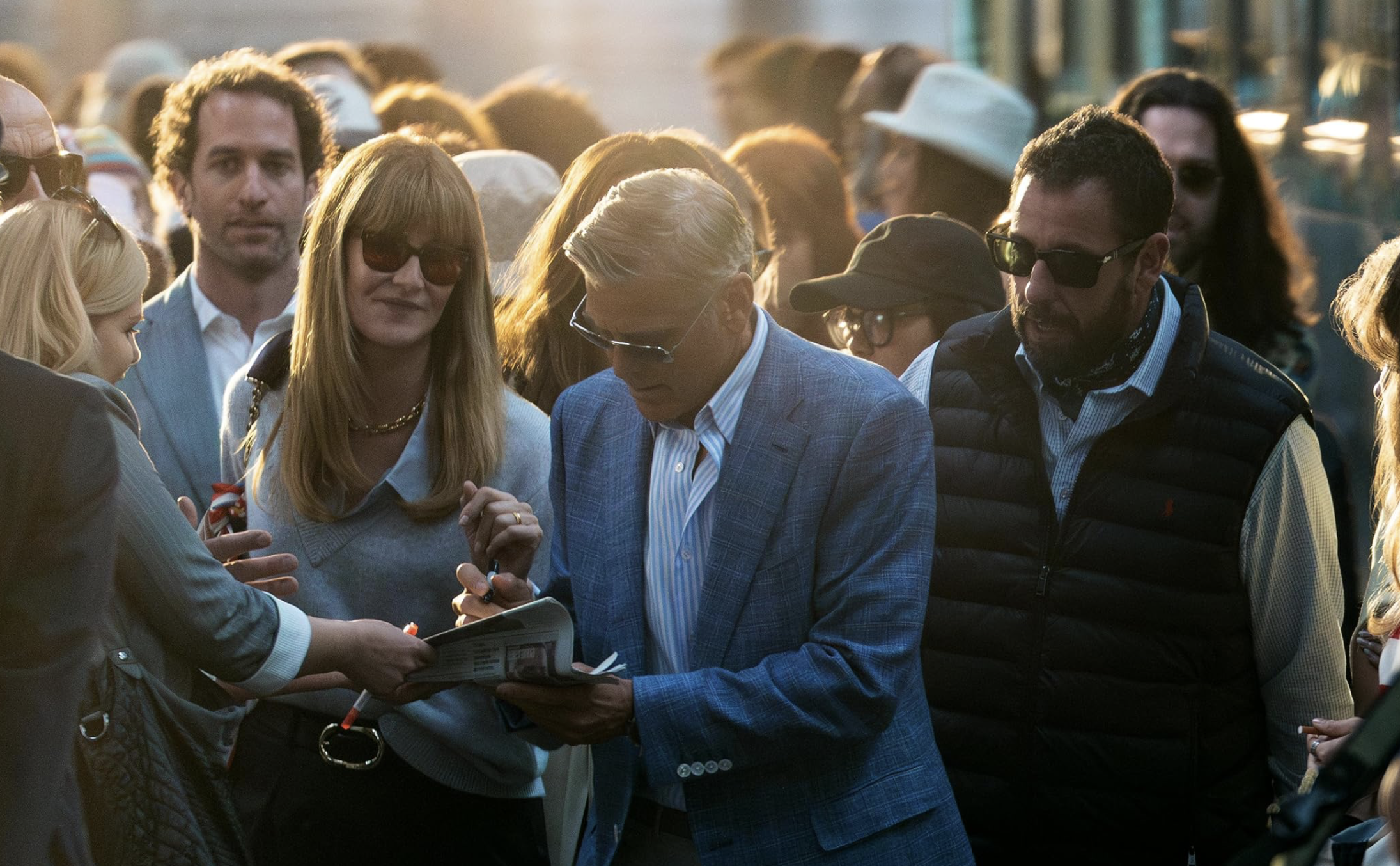
George Clooney in Jay Kelly Photo by Peter Mountain/Netflix/Peter Mountain/Netflix - © 2025 Netflix, Inc.
Somewhere in chasing the legend of Jay Kelly, he misplaced the person. And he realizes, too late but not hopelessly, that the people who needed him least as a star were the ones who needed him most as a father.
This brings the film to its final, miraculous five minutes—when Baumbach lets the noise fall away. It’s Jay, and it’s Clooney, and the story arriving at its softest truth. A tribute to the character, yes, but also to Clooney’s movie-star mythos: the way he has dazzled for years, and the way he dims the wattage here so we can finally see the man behind it.
And then Jay says it:
“Can we go again? I’d like another one.”
He means the line, the scene, his life. He means fatherhood. If he could reset—just one more take—maybe this time he’d get it right.
The credits could roll and the crowd would applaud, but for once, applause isn’t what he wants.
He wants the quiet.
He wants the chance.
He wants to be himself—finally, frighteningly, tenderly.
WATCH TRAILER
JAY KELLY
DIRECTED BY noah BAUMBACH
very laboratory