
CIELO - Interview with Alberto Sciamma
THE LONG READ
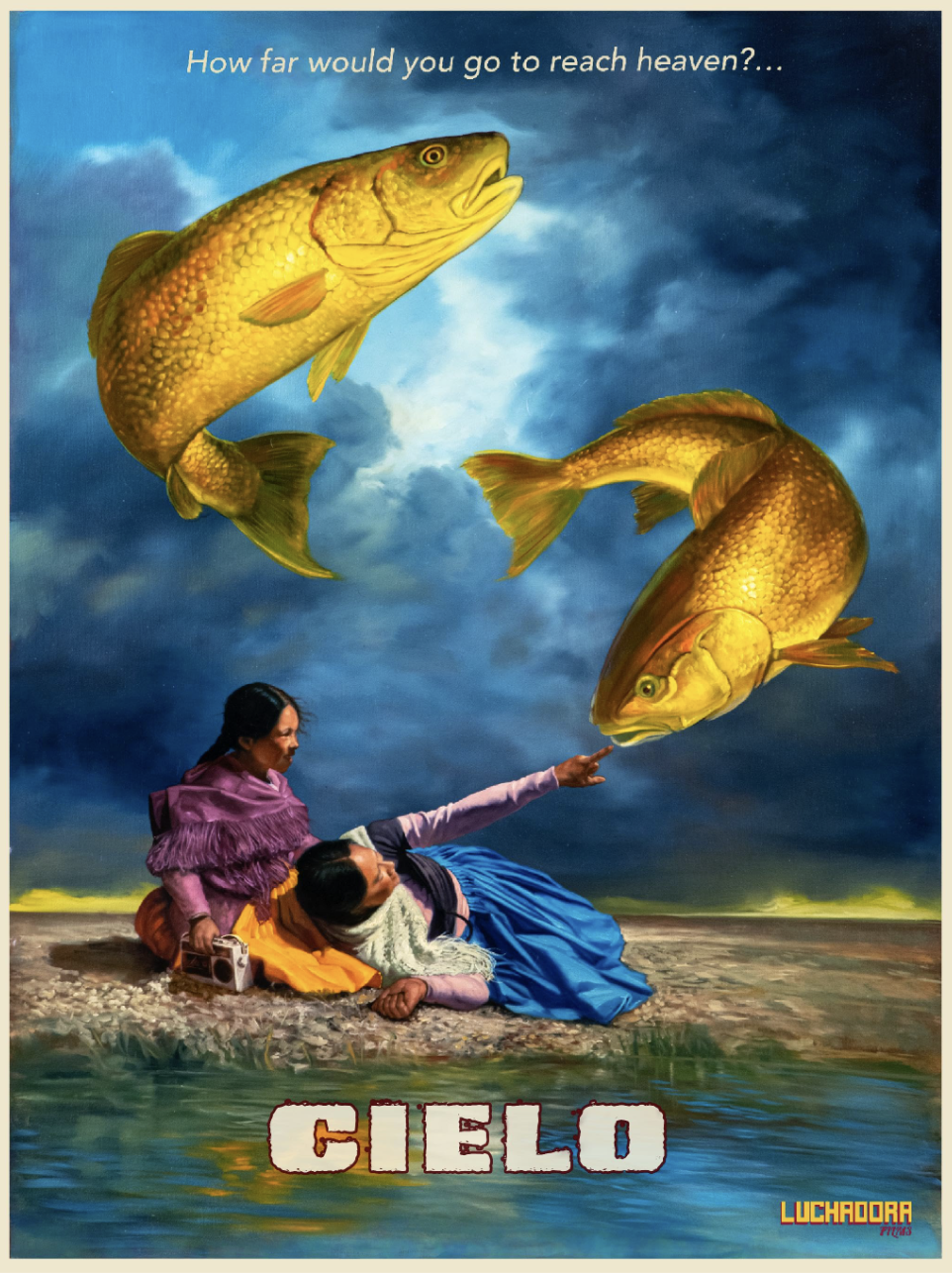
The film Cielo is about an eight-year-old Aymara girl with magical powers who is convinced she can lead her mother to paradise. She embarks on a journey across the Bolivian Andes, leaving small miracles in her wake.
Spanish filmmaker Alberto Sciamma's magical realist road movie bursts with empathy and wonder. The Lab Mag was lucky enough to screen the film for members and talk with director and writer Alberto Sciamma about this life changing journey.
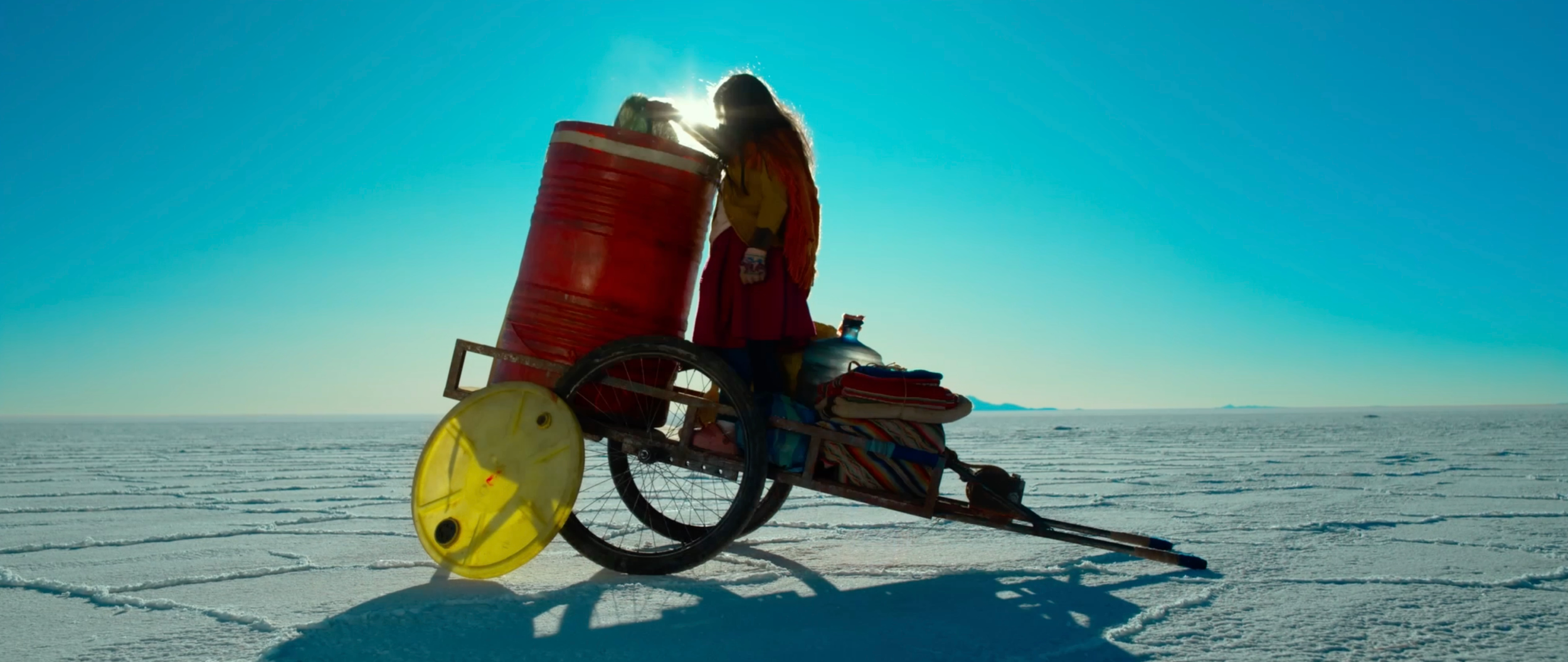
Fernanda Gutiérrez Aranda as Santa in Cielo. Image courtesy of Juno Films ©Alberto Sciamma
This interview was been edited for brevity and clarity.
THE LAB MAG
Tell us about your childhood, and can you pinpoint the moment film as an art form resonated with you?
ALBERTO SCIAMMA
I was born in Barcelona. My childhood was fairly normal, but the city, at that time, was creatively claustrophobic for me. Franco was still alive, so, you couldn't really do much. I wanted to study film, but there were no schools to go to. So I left for England.
My father loved Italian movies. I watched many neorealist movies with him: Fellini, Pasolini, all the inni's. When Franco died in 1975, I was around fourteen years old and I was able to see the films that had been censored. From Buñuel to Herzog, and films like In the Realm of the Senses. Movies that shocked me because I didn't know you could express those thoughts in such a way. I was used to whatever they would show on Spanish TV, and we only had one channel.
After 1975, suddenly the world opened up. I was swallowing movie after movie, and I loved them all because they fascinated me. They told me that things were much more complex. They were not simple storylines. I remember watching Simon of the Desert by Buñuel and thinking, what the heck is that? A guy on a column all through the movie. I just loved everything I was discovering.
LAB
Who or what has been your greatest teacher?
AS
Well, the best teacher is life. Everybody you meet, and everything that happens to you.
Going back to living in the time of Franco, all the art I was consuming, was non-risqué because of censorship. All the Spanish art, be it a guy with a guitar making protest songs or whatever, the artist couldn't say, "Get this guy out of here." So they had to speak in metaphors. There would be a forest and a rotten tree in the forest; you had to read between the lines. I was consuming art which was talking in metaphors, and that became a very strong influence in the way I approached filmmaking. Maybe that was my teacher.
LAB
Why choose filmmaking over painting or any other medium?
AS
I love music. I love sound. I'm fascinated by sound design. I love everything to do with photography. So filmmaking encapsulated all these areas of interest. And it was my reason to get out of Spain at the time. I was watching movies that left me open-mouthed, and I loved that feeling of searching.
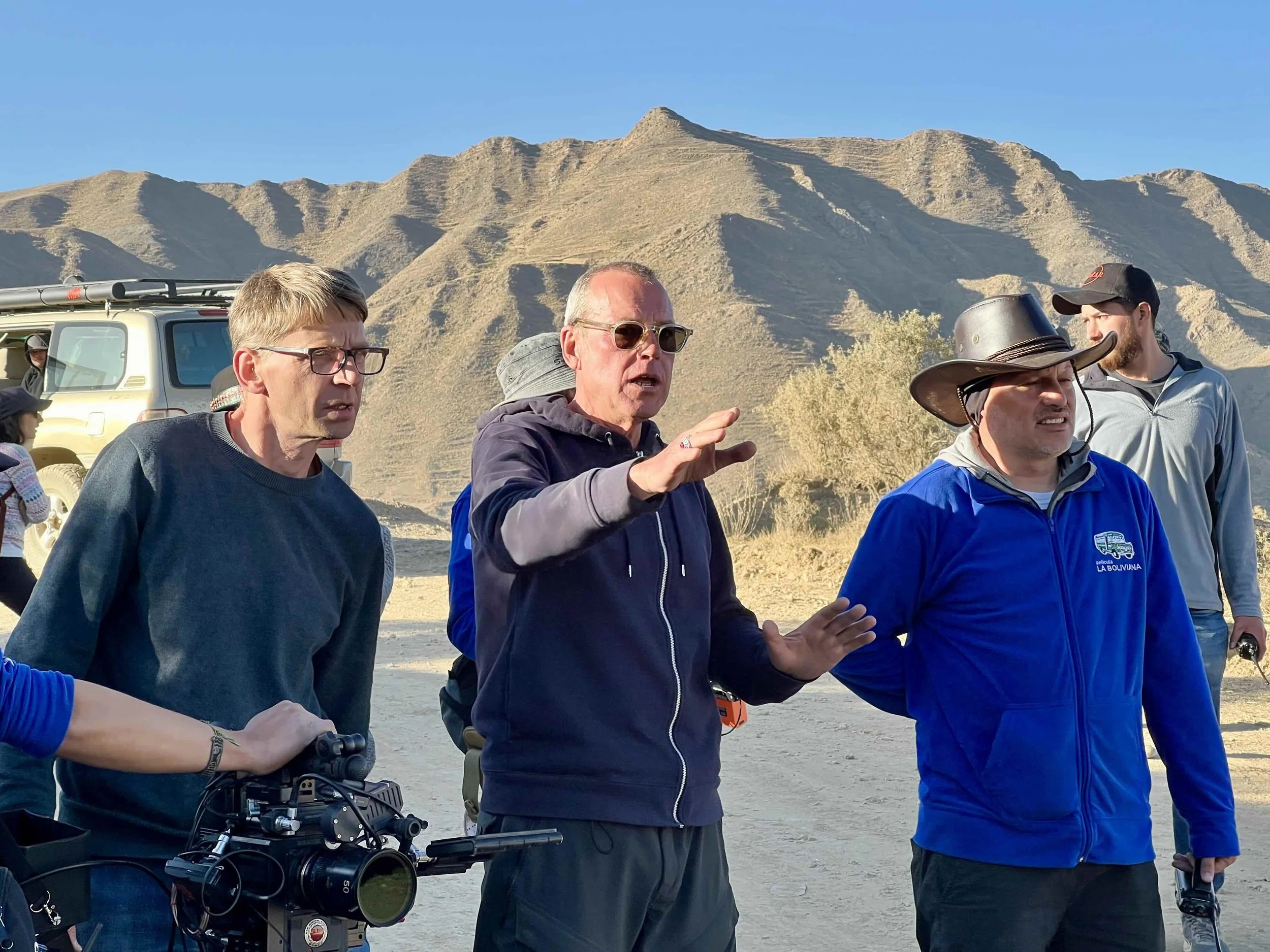
Alfonso Sciamma on location filming Cielo in Bolivia. Image courtesy of Juno Films ©Alberto Sciamma
LAB
CIELO is a very surreal, poetic story. Is there any mythology in the film that relates to Bolivian folklore?
AS
No. It is a very personal story because it's about me wondering why are we here, what's happening, what is faith? From the beginning, I knew the story would not be anthropological but universal. We all want a better place to live; we all need help sometimes.
So, I didn't pick up a story from Bolivia and put it in the movie. If the first draft of the script was a sponge, I submerged it in Bolivia.
And everything in Bolivia informed the story. The way the people were, the feelings I was getting from being there, all of that became the movie. So, I consider it 100% a Bolivian movie.
We have certain symbolism in the film, and it may seem random, but it's not. There is a reason for it. But it's there to construct the story, rather than to give meaning. The condor is obviously a national animal; it appears on the flag, and they say that you can put your prayers in the condor and it takes them to heaven.
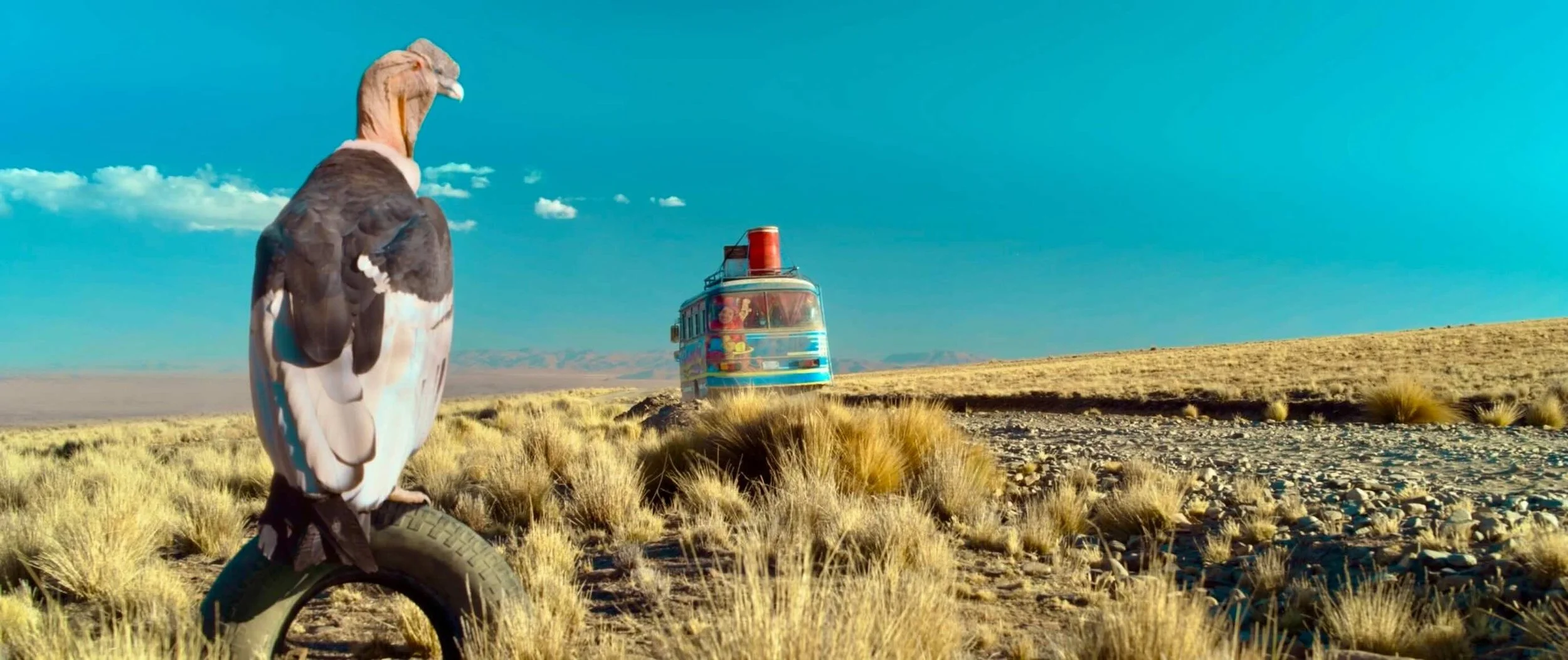
The Condor and the bus on location filming Cielo in Bolivia. Image courtesy of Juno Films ©Alberto Sciamma
In the Aymara community, their knowledge of time is different; they consider that the future is behind you. And the present and the past are in front of you because you recognise it, you can see it, you can remember it, but you cannot see what's going to happen. Sometimes, Aymara people say things like, "I've been to your house," they mean, "I'm going to go to your house." You're like "What? What is going on here?"
And because it was a seven-year process to make this film; all those little things I was discovering, I was incorporating them into the script in one way or another, but not into a specific mythological story.
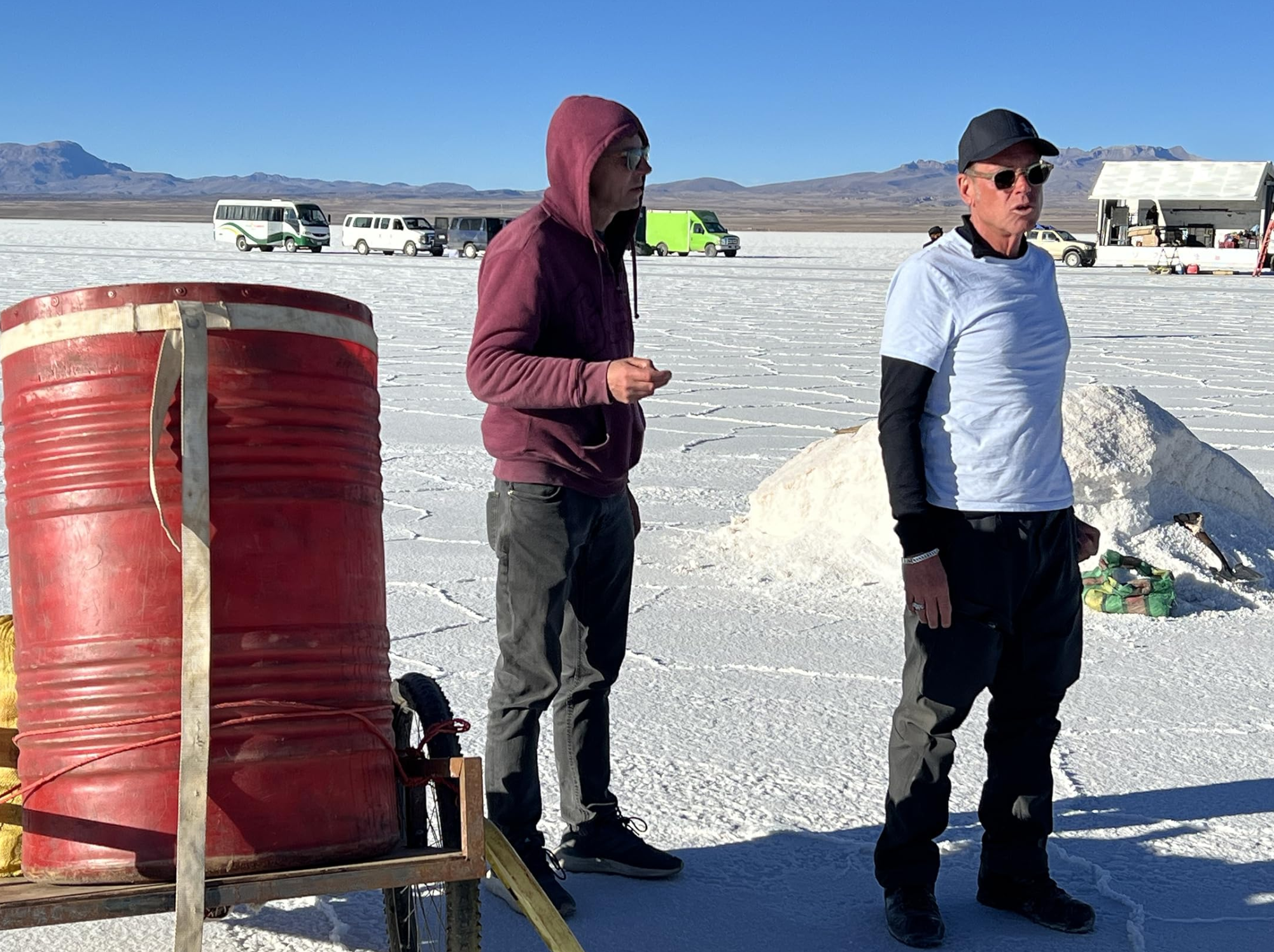
Working on Cielo, film director Alberto Sciamma
Image courtesy of Juno Films ©Alberto Sciamma
LAB
What was it like filming in such a remote area?
AS
Bolivia is a huge country, it’s practically the size of Alaska. But it only has twelve million people living there, mainly in the cities, Santa Cruz and La Paz. Filming in Bolivia works in a completely different way than anywhere else. Let's say you need an actor. Somebody will give you a telephone number. Hey Fernando, you don't know me, but can I send you a script? He answers Yes, please. There are no agents. There are only 12 cinemas and one facility house where you can get lights in the entire country. So if you need a prop, you cannot go to a prop house; you have to go to the market.
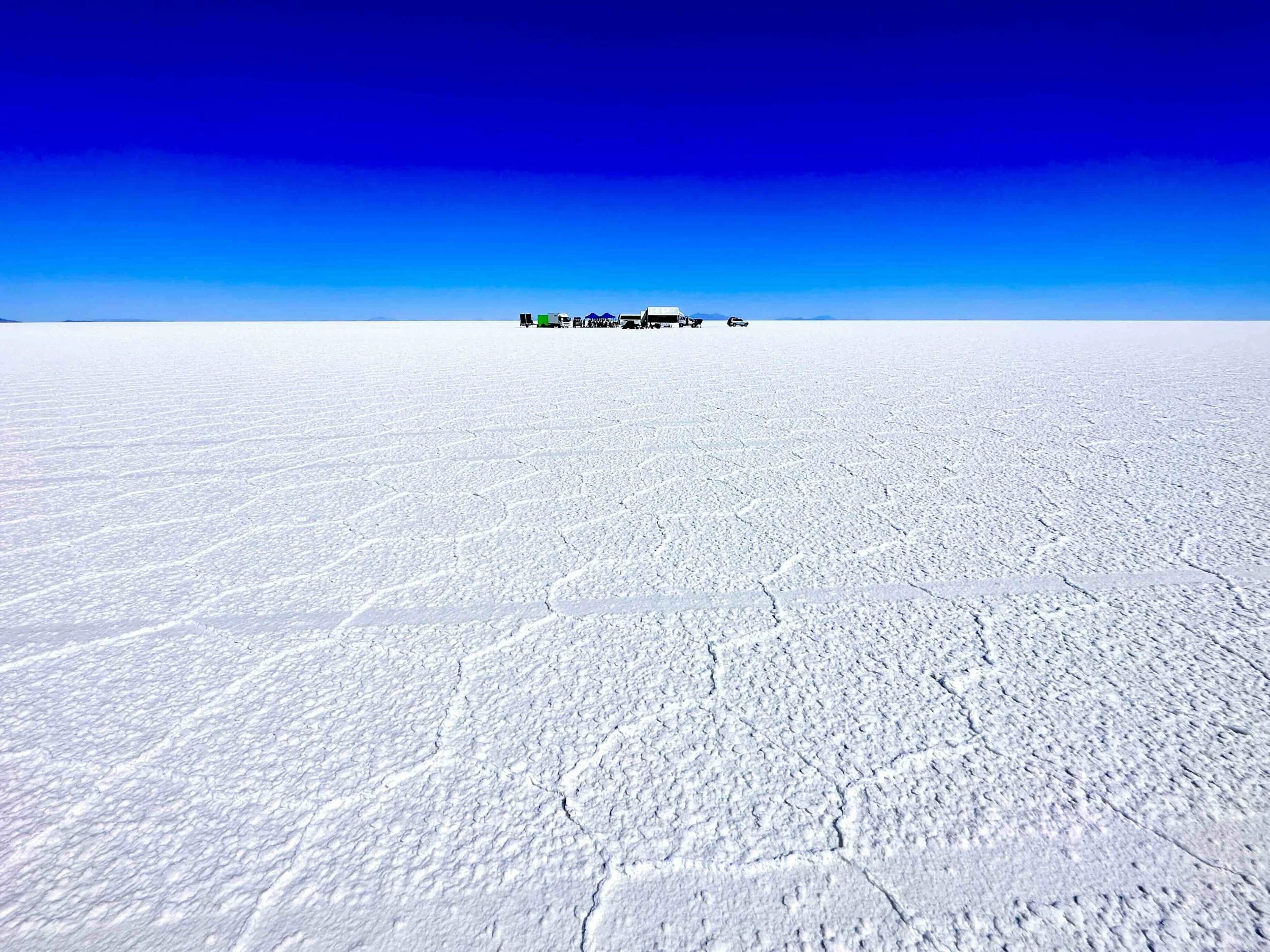
Ceilo Base Camp - Salar de Uyuni Image courtesy of Juno Films ©Alberto Sciamma
You have to change the way of thinking and go back to the old days of filmmaking. And you have to trust not only your instincts, but all the people that you are working with, because 99.9% of all the crew and actors are Bolivian.
But none of this would have been possible without strong roots. Together with the producers—John Dunton-Downer, Alexa Waugh, and Bettina Kadoorie—we became those roots: a family that embraced the risks we were taking. Without their support and creative input, Cielo wouldn't have become a reality.
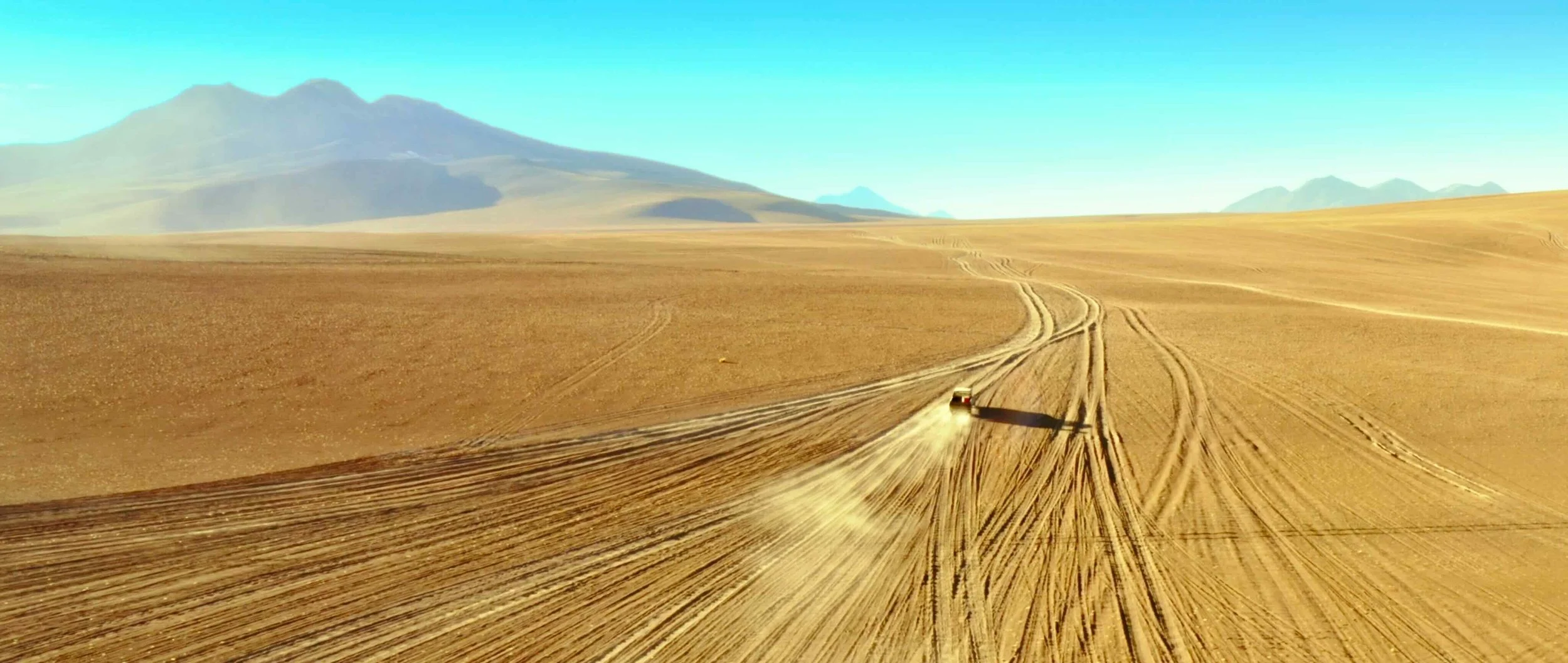
On location filming Cielo in Bolivia. Image courtesy of Juno Films ©Alberto Sciamma
LAB
What kind of weather conditions did you have to deal with?
AS
The movie looks sunny, but actually it was -16 degrees in some places. And the altitude is a killer for anyone who is not used to it. If you see some of the photographs of us in Salar de Uyuni, the big salt flats which are enormous, it looks like a polar expedition from what everybody's wearing, but visually it looks incredibly sunny and beautiful.
I spent two years talking every week with Alex Metcalfe, the director of photography. We did a lot of homework to prepare. Cielo is a visual movie and Alex truly brought his magic to it.
But I would say that the impediments of working in Bolivia are what make working in Bolivia so incredibly good.
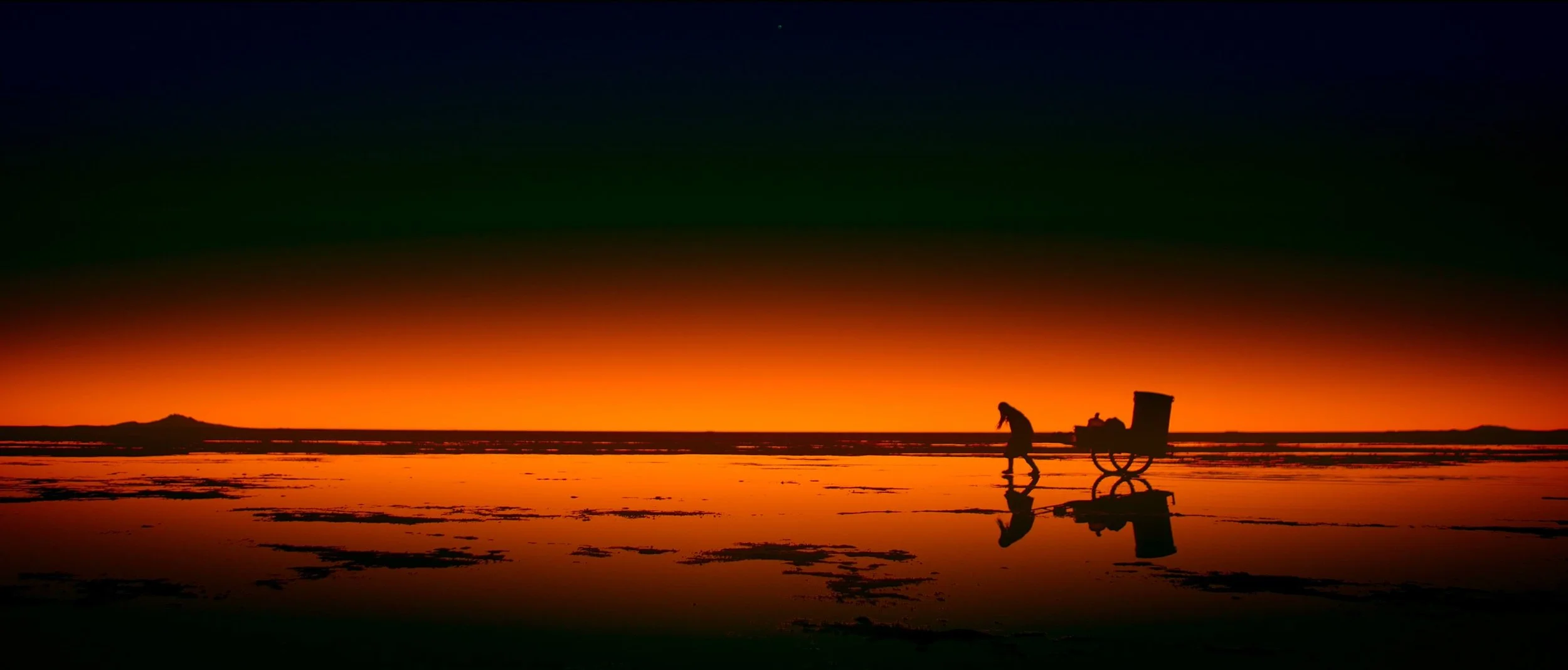
On location filming Cielo in Bolivia. Image courtesy of Juno Films ©Alberto Sciamma
LAB
How did you discover Fernanda who plays Santa? She delivers such an incredible performance for one so young.
AS
We found a lovely woman who offered to try to find us a girl to play the part of Santa. They presented fifteen possible girls from the schools of El Alto, which is the poorest area of La Paz. We chose three girls, and they were all great for different reasons. But it took a year before we could begin shooting, and so a year later, all the girls had grown.
Our producer John Dunton-Downer is married to Anna Maria Vera, a very famous classical pianist, and she runs a music school in La Paz called Bolivia Clásica. So, Anna Maria Vera told us there was a girl learning the violin in her class who was right for the part, but she was only seven years old. So I thought, wow, seven! I have two daughters, so I know what seven means.
We went to her house, and I realised she wasn't seven; she was seventy-seven in a seven-year-old's body. She was the wisest kid I could imagine! She was three years ahead in her school. I asked her, What are you reading? And she said, Well, I just finished the latest Harry Potter. She had read all the Harry Potter books. I mean, at seven I couldn't read more than a pamphlet on bicycles. So, she was very, very clever.
I worried that she may have issues with some of the harsher sequences, but she didn't. She said, I would like to understand why the character bites the policeman, for example, which you will not understand until you see the movie. But I could talk to her like an adult. I realised also that she was not acting. Even in the rehearsals, she was believing it. All the tears that she cried were real tears.
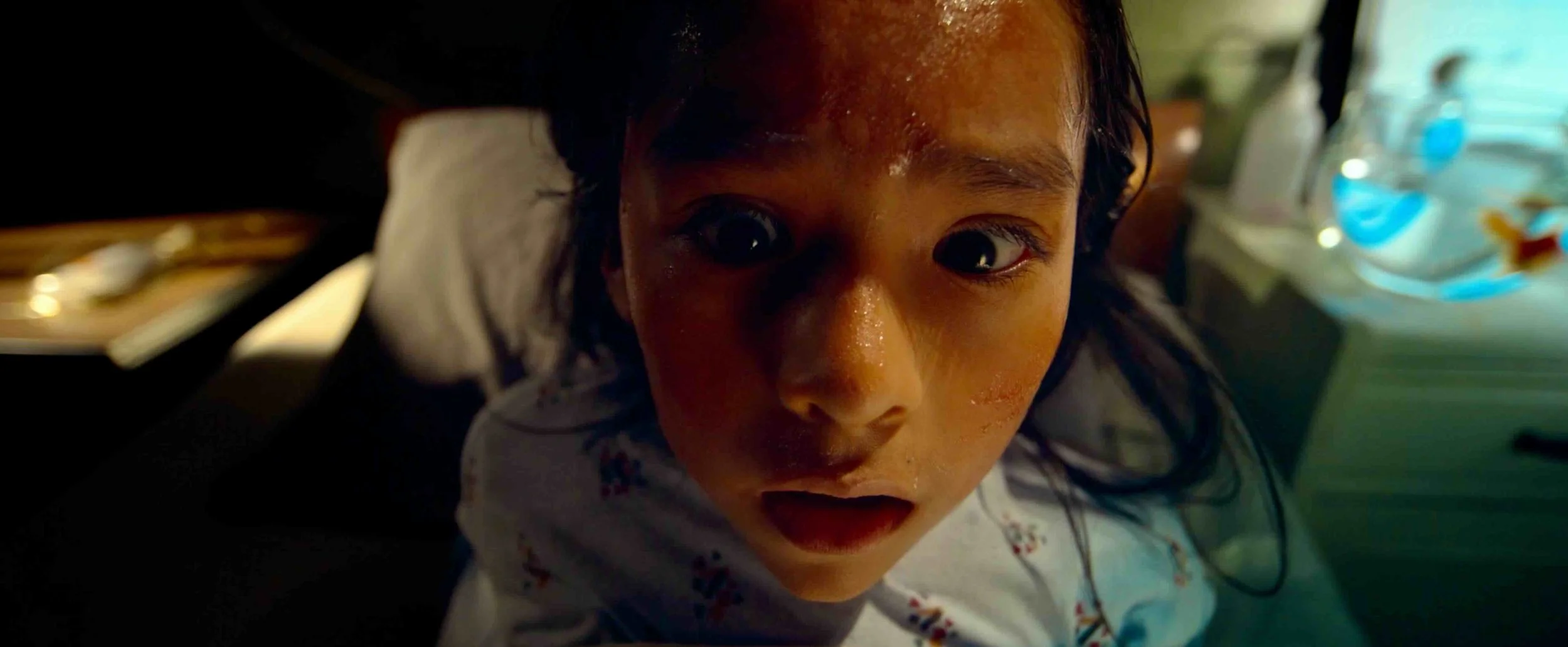
Fernanda Gutiérrez Aranda as Santa in Cielo. Image courtesy of Juno Films. ©Alberto Sciamma
In the rehearsal process, I had to find a way to direct her. Because when she was rehearsing with the policeman, whose character in the beginning is a grumpy bad guy, she was getting frightened. She couldn't separate the real Fernando, the actor, from the part he was playing. And it took a while for her to understand the difference. But once she did, I could direct her by giving her just one line. For example, I would say, You are looking at the fish as if you were an alien that has never seen a fish. And she would do the rest.
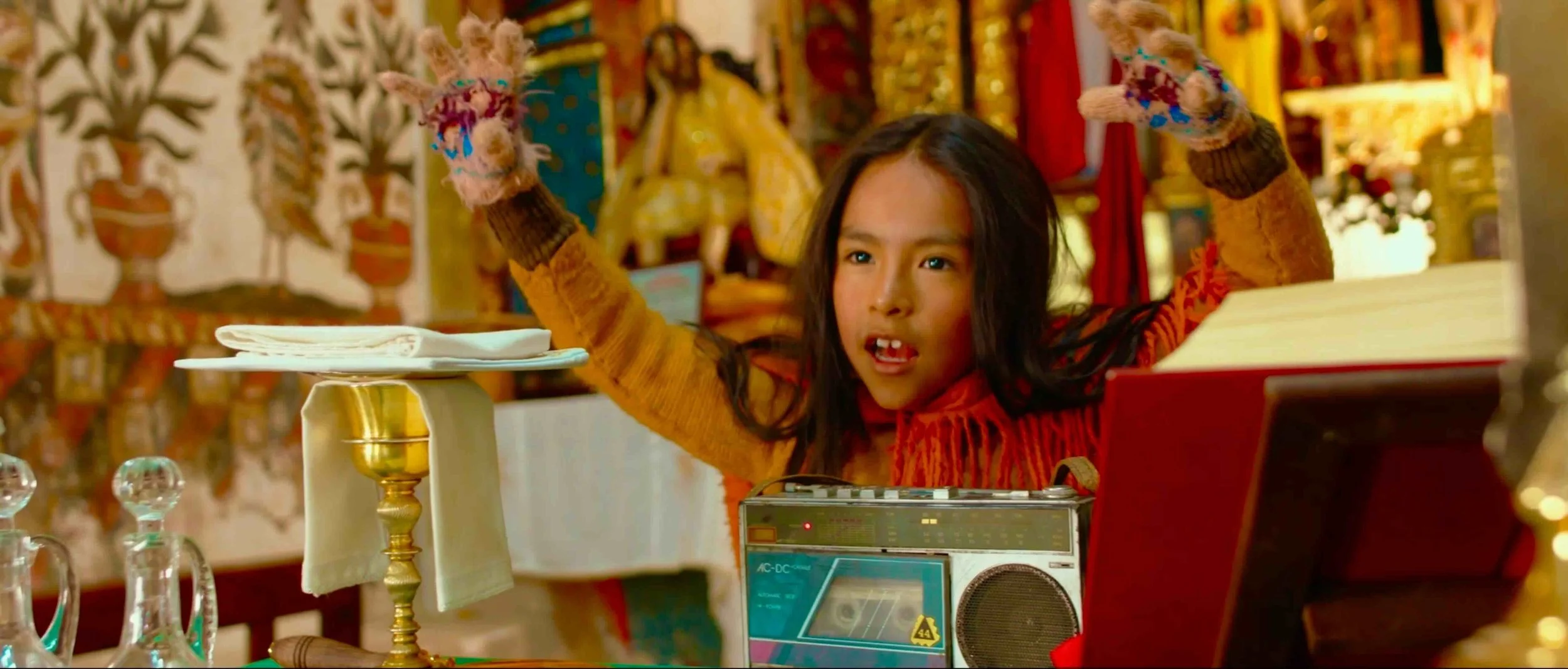
Fernanda Gutiérrez Aranda as Santa in Cielo. Image courtesy of Juno Films. ©Alberto Sciamma
LAB
During the filming, did you have any unexpected moments that took you in a completely different direction?
AS
Yes. Half of the cast were new to acting except for the two policemen, Fernando and Christian, and Luis the priest, who are well known actors in Bolivia. The Cholitas, the women on the bus, had done maybe one play, and Carla, who plays the mother of the little girl Santa, is a schoolteacher. La Reina is into films and theatre now, but this was her first movie.
What I discovered was that I had to adapt to them. For example, in the script, the character of La Reina was much more acerbic. But when we were filming the flashback of the little girl milking the cow, the cow was getting really anxious and we had to stop filming. So, the owner of the cow brought in a calf, who started suckling. And at that point, the cow calmed down, and we could continue shooting.
When I saw that, I completely rewrote the scene. When La Reina is in the cell, and the little girl approaches her to talk about what's happening. It was originally written in a very jokey way, but because I could see that the cow's character was like La Reina, it changed into a tender scene.
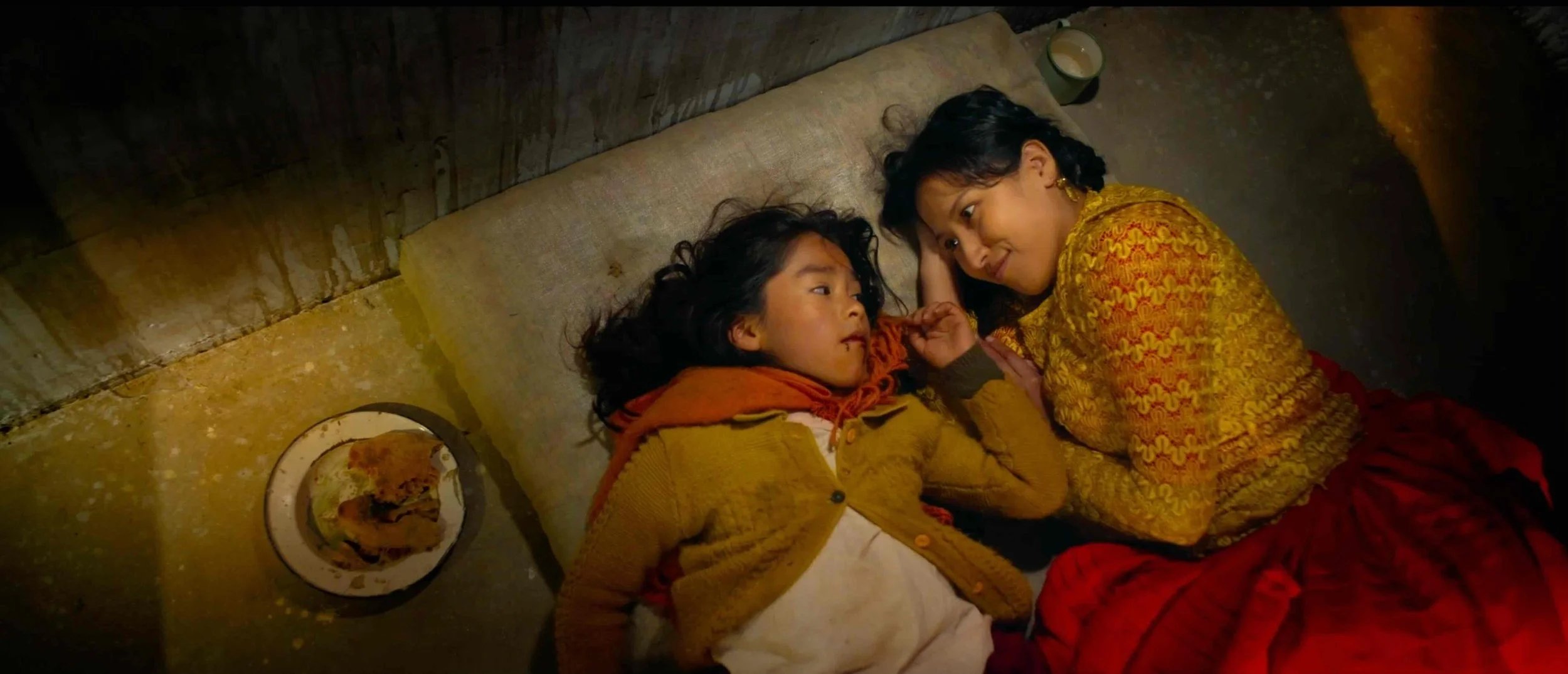
Santa (Fernanda Gutiérrez Aranda) with La Reina (Sasha Salaverry) in Cielo. Image courtesy of Juno Films ©Alberto Sciamma
And everyday there were little things, like the slider for the camera we had was a crappy one for photographic cameras, not made for our camera, and it was shaking all over the place. We had to adapt. Okay, it’s shaking, then shake it more. Or how to get the one single take of Sasha swallowing a goldfish. Every day there were challenges and the trick was to go with them rather than against them.
LAB
How do you approach the visual element of storytelling as a writer? Tell us more about your creative process?
AS
I normally start with a single image. Not a story I want to explain, but something I want to investigate. And I had an image of a little girl swallowing a fish. I could see the girl in a barren landscape in front of a lake.
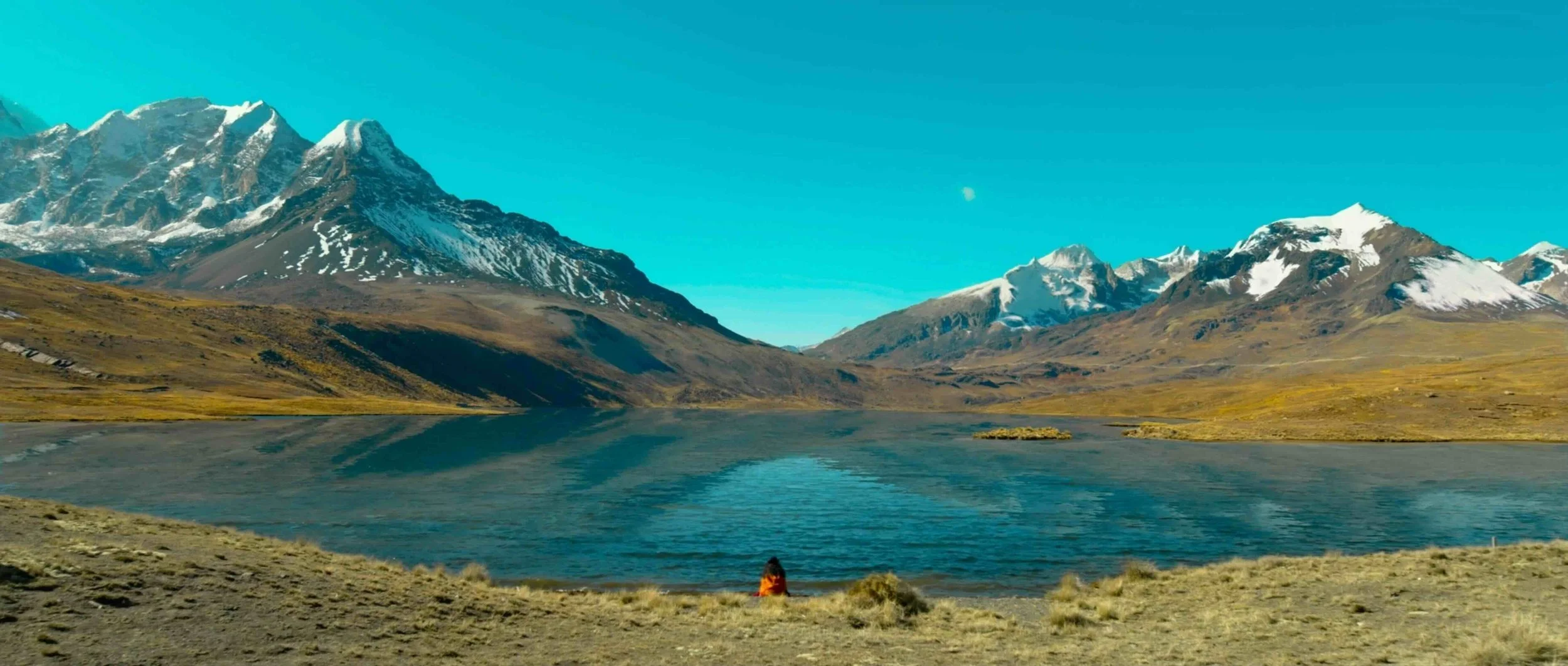
Santa (Fernanda Gutiérrez Aranda) in Cielo. Image courtesy of Juno Films©Alberto Sciamma
I remember being in Berlin, and I was talking with our producer John and his wife Anna Maria Vera and I said, "I've got this image stuck in my head." I described it to them. They said "If you need a deserted landscape, why don't you explore Bolivia?" That's how the whole process started.
I knew the first page of the script. I had no idea what was going to happen on the second, the third, or the fourth. The script was growing, like a stream of consciousness. I had one rule as I was writing: don't be cynical; don't be frightened to expose your heart. And that was more complex than it sounds because I couldn't end everything with a joke, which would have diminished the importance of the heart. Every time I deviated from that, I went back to "just go for the heart."
And in my writing process, I rejected the obvious and tried to find a different way to explain it. In the movie, there is a moment I needed to quickly establish that this policeman, who has a very big moustache, misses his wife. In the first draft, there was a photograph of the wife, and we cut away to some flashbacks. And I wasn't happy, so I kept on distilling it. It's like moonshining. I have the oranges and the fruits, I have the grains and I have the sugar, I ferment the whole thing. That is the normal scene. But then I want to filter it so it still contains the shadows, the flavour of all those fruits. So I was trying to distil everything into the smallest moment. I decided I'm not going to put a photograph of the wife in the film. I'm going to do it with his moustache. And then the moustache became a theme.
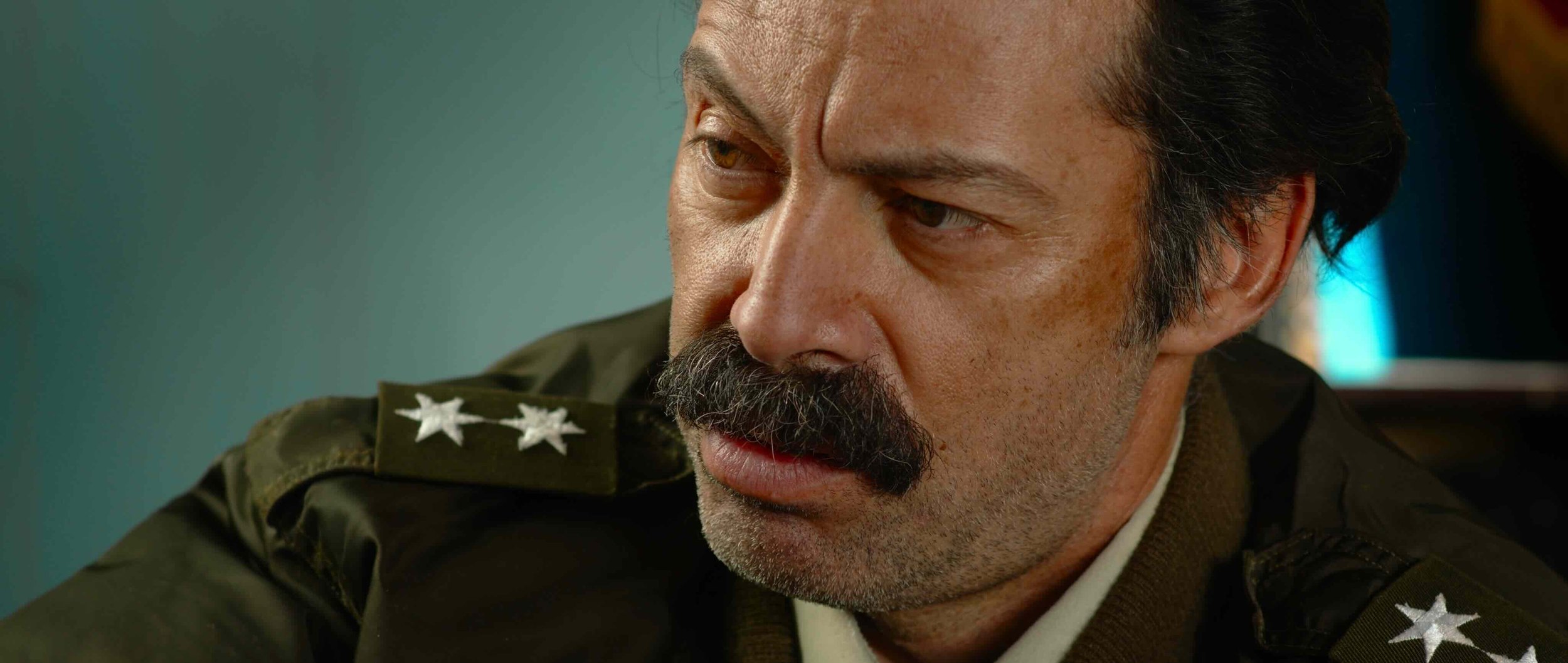
Gustavo, the Policeman, (Fernando Arze Echalar) in Cielo ©Alberto Sciamma
Life is not full of profound moments; it's full of still, stupid moments which we make profound. And so, it's trying to find the something that also makes me smile. I have a cheeky nature, so why not?
LAB
The women in the film are real wrestlers. I'd love to know more about them and what it was like working with them, because they look like such fun.
AS
They are so funny. They made everybody smile. I consider Cielo to be a feminist movie, even though I'm a bloke. The feminist force of the movie had to come through these women. But how am I going to direct them? How am I going to make them like a wave of joy? I was worried about that.
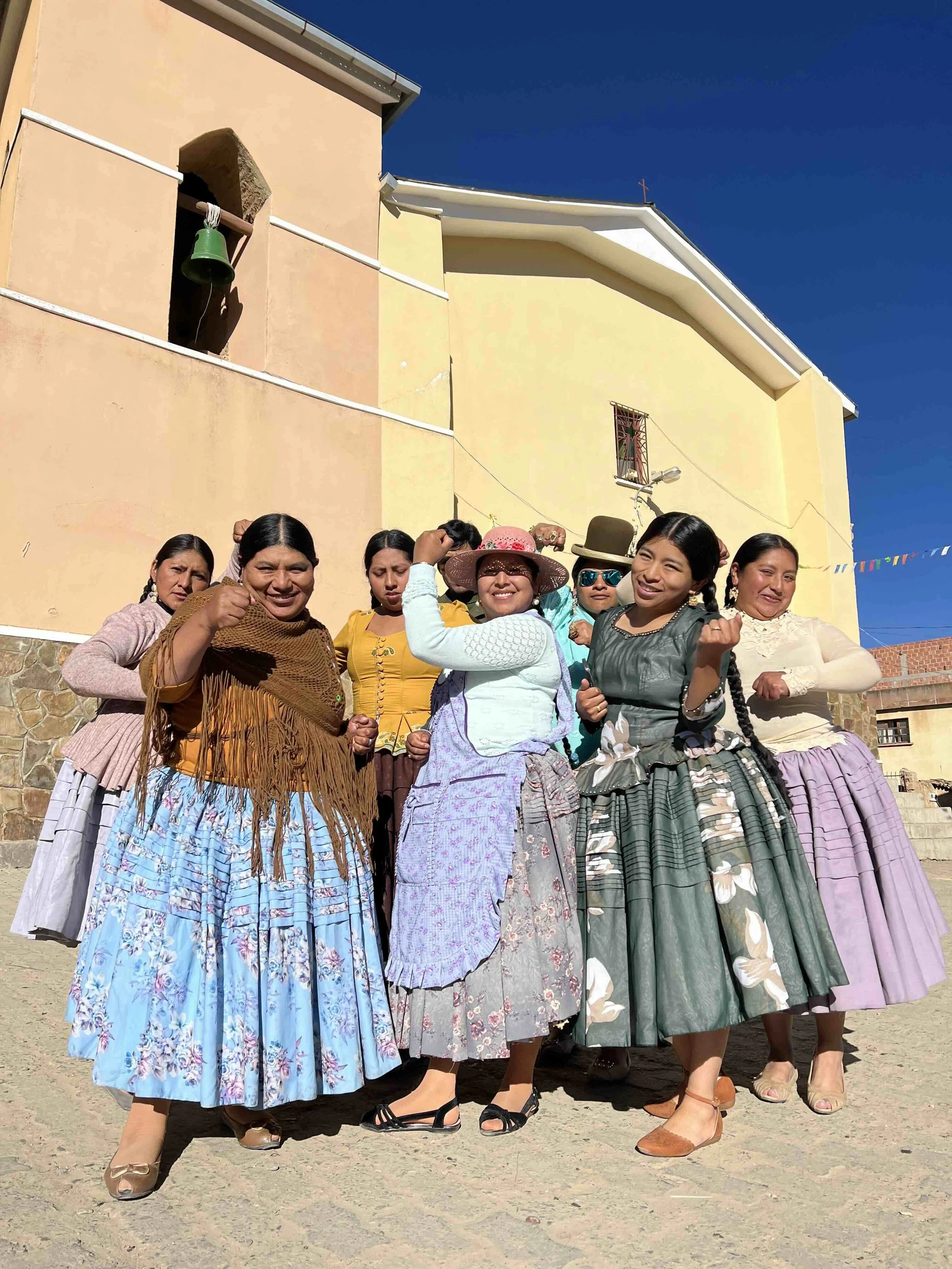
The Cholitas in Cielo. Image courtesy of Juno Films ©Alberto Sciamma
I selected them through photographs and a quick conversation. Once they were all together, and we had that crazy little bus, they started laughing their heads off at me and singing, mucha ropa, mucha ropa, which basically means take my clothes off. They were so full of spirit and joy; they were really the most powerful feminine spirit that you can put inside the film. So working with them was a super pleasure.
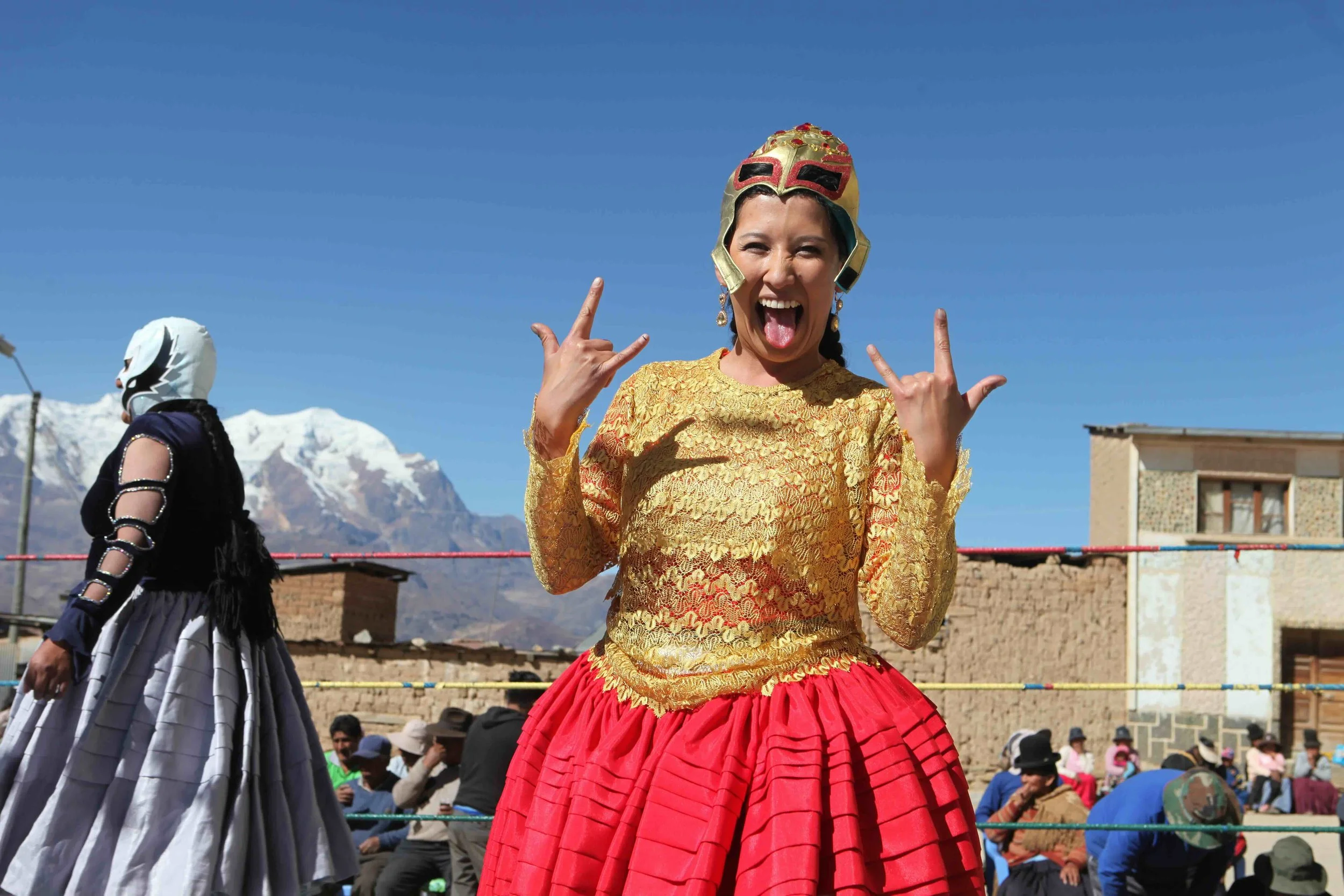
La Reina (Sasha Salaverry) in Cielo. Image courtesy of Juno Films ©Alberto Sciamma
LAB
What scenes are you most proud of and were there any happy surprises?
AS
One scene I'm particularly proud of is a very simple two-shot of Santa speaking with the priest and basically negotiating with him to exchange some potatoes for a broken-down truck. I changed the entire dialogue of that scene an hour before we shot it. I gave it to Fernanda, who plays Santa, and to Luis, the guy who was playing the priest. I couldn't believe how Fernanda was able to do it, all new dialogue and make it work. At that point, I realised, my god, this is a precious scene, simply because of her talent, the way that she opens up, the way her acting shone in that scene.
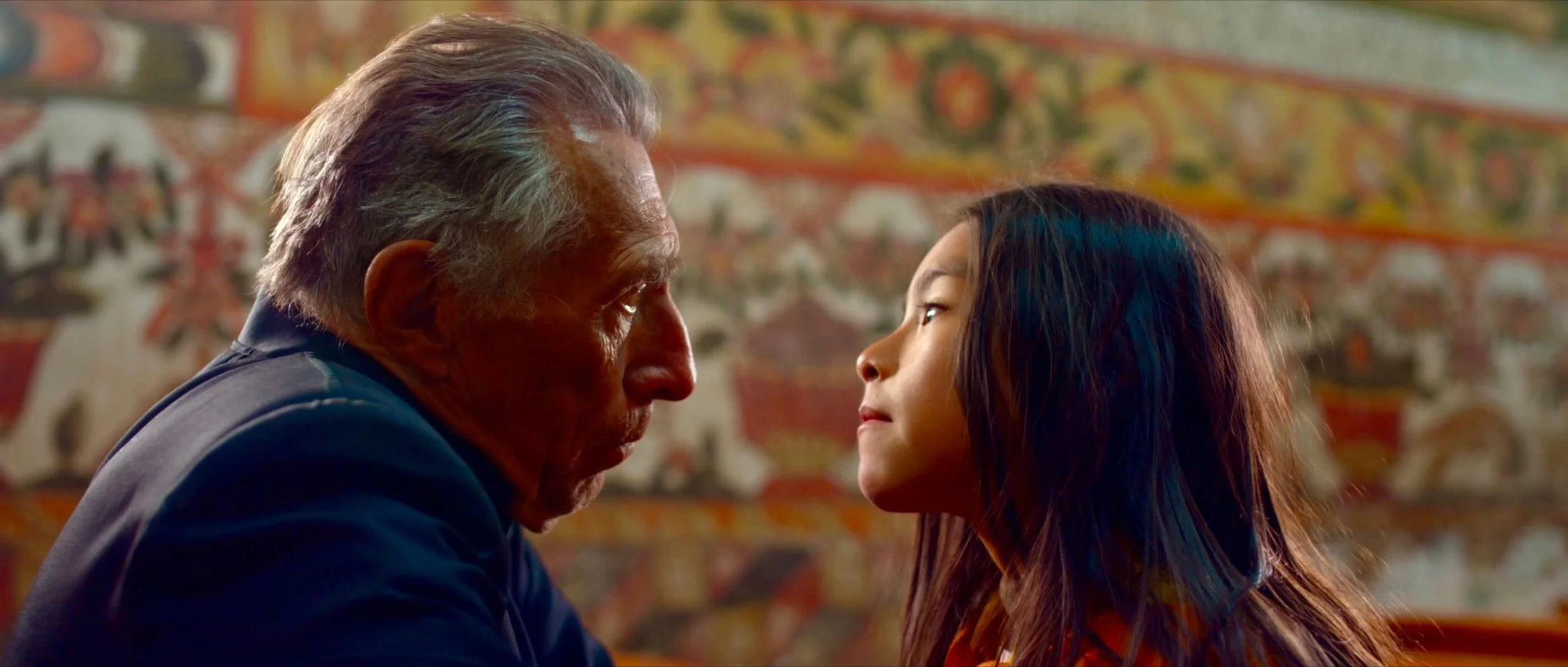
Father Jaime (Luis Bredow) and Santa (Fernanda Gutiérrez Aranda) in Cielo. Image courtesy of Juno Films ©Alberto Sciamma
I'm also proud of the Camino de la Muerte scene with the bus. It was very difficult to imagine how it was going to work. We had to keep on going back to Death Road to get the shots of the bus in the exact same place. Every time the bus drove down that endless road along the cliff’s edge, the driver had to go to the next village to turn around and come back.
When I saw the relationship that was developing in front of the camera between La Reina and Santa on the bus, it informed me of the pace of the scene. I realised it had to be slower. And then I was trying to think of a sound that would be able to bring you into those tense three minutes and I found the sound of the magnetic field of the Earth recorded by NASA. It was a weird, crazy, organic sort of sound. And I knew that with a simple melody, that could work and be the conduit.
The bus was decorated by the art department based on a type of building they built in La Paz called cholets. Cholets look like a Japanese robot from the eighties, with this sort of colour and shapes, like a crazy interpretation of Art Deco. The bus was a character in its own right.
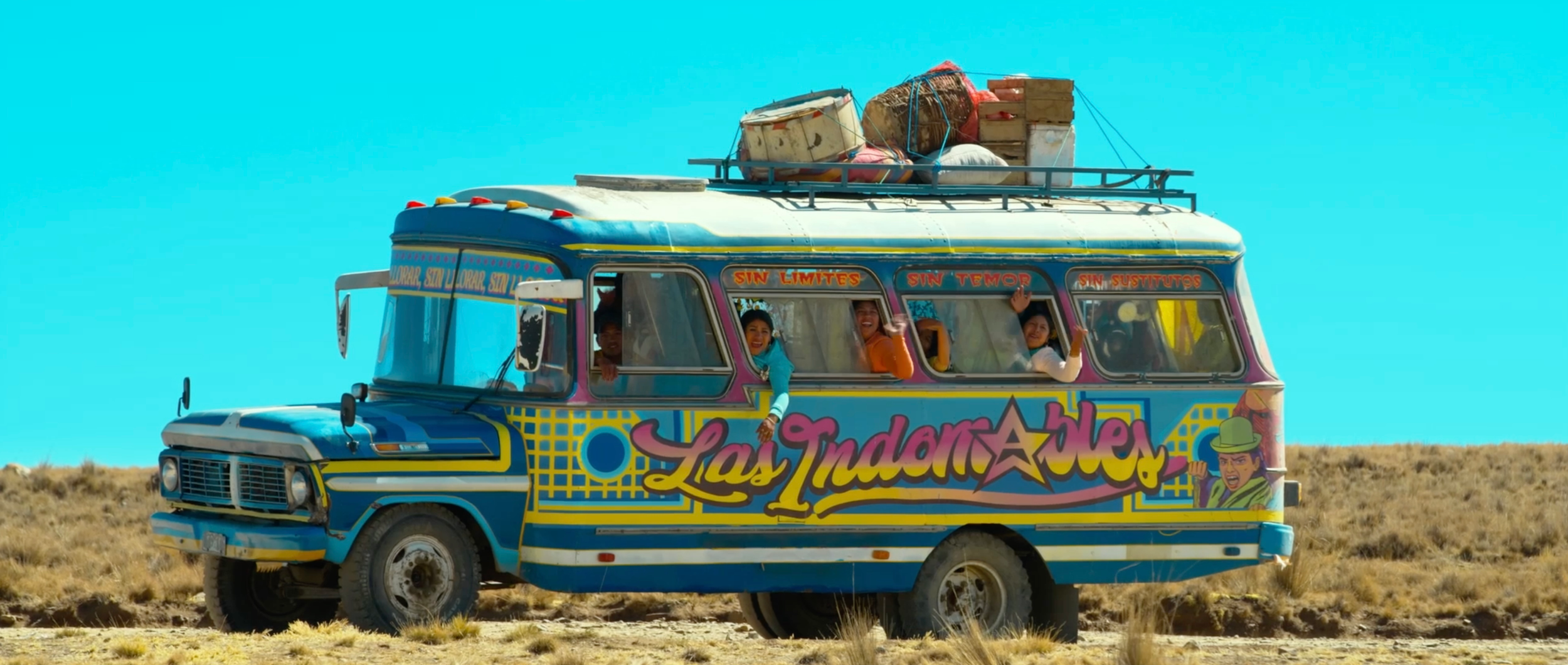
The bus in Cielo. Image courtesy of Juno Films ©Alberto Sciamma
But the problem was no one could drive that thing, not even a professional driver, because the buses are so temperamental and difficult. We had to contract the actual driver to appear in the movie. It's a dangerous road where people die every year. Now it's only for bicycles; but they used to have monthly deadly accidents there.
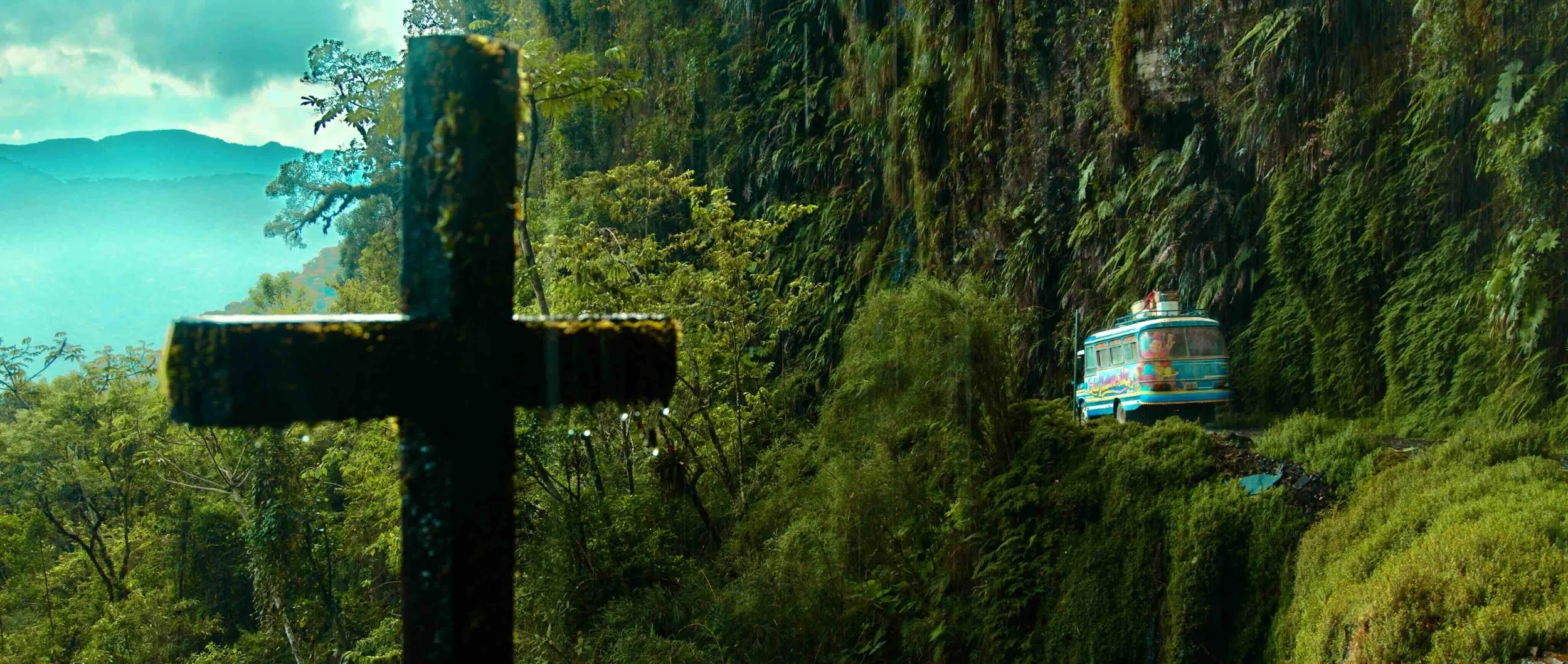
The bus traveling the Camino de la Muerte in Cielo. Image courtesy of Juno Films ©Alberto Sciamma
LAB
What's the best advice you've ever been given?
AS
My father said, never get married. I didn't listen to that. And I got married twice, and it didn't work out, although I'm very happy because I've got two lovely daughters.
The best advice related to filmmaking I was given was on my first movie by a really experienced first assistant director, Kuki López Rodero. Kuki had been the first AD on David Lynch's Dune, so imagine the problems they had there. And Total Recall, he had worked on big Hollywood stuff. So he became my teacher and my advisor, because I had only made music videos and I didn't know how to deal with everything. He told me two things which I follow to this day.
The first one is never eat an egg sandwich from the buffet. When I asked him why, he said: "Because you're going to bite into that thing, the runny egg is going to go everywhere, you're going to go and speak with your actor, and he's going to be looking at your dirty shirt."
So I never do that. And then his other piece of advice was "Never look at the monitor."
His philosophy was, it's much better to stand close to the camera and see everything else; if you're just looking at the monitor, you are boxing yourself in. So they are not life advice. Well, maybe the egg on your face is one for life.
WATCH TRAILER
CIELO
DIRECTED BY Alberto SCIAMMA
WRITTEN BY ALBERTO SCIAMMA
produced by JOHN DUNTON-DOWNER
cast: Fernanda Gutiérrez Aranda, Fernando Arze Echalar,
Sasha Salaverry, Luis Bredow
very laboratory