The Horses of Sable Island
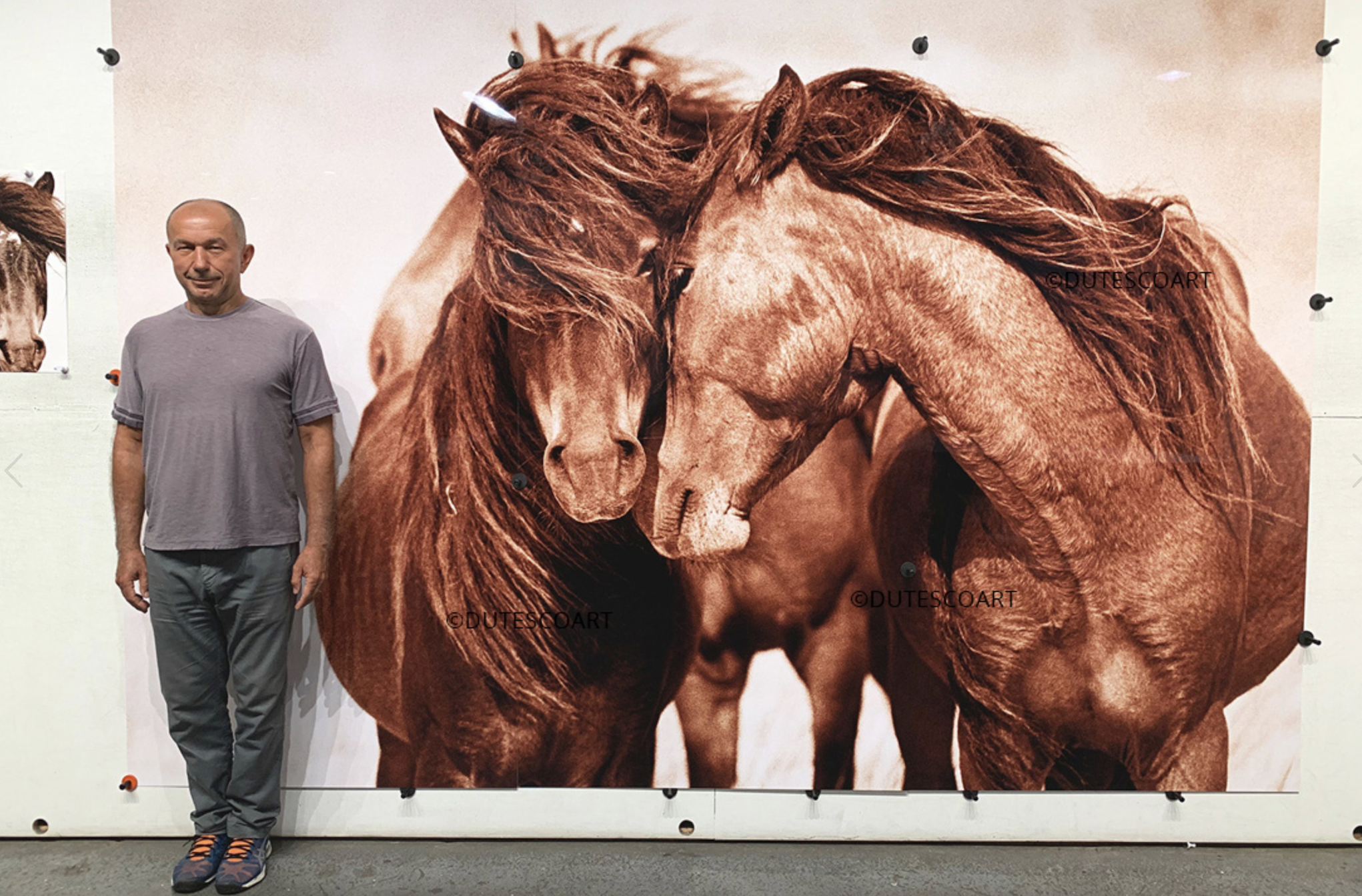
Roberto Dutesco standing with his work Love from his series The Horses of Sable Island
"I believe that beauty has the power to transform space, relationships & conversations.
My search for beauty has always been the singular inspiring force behind my 35-year journey of exploration."
Roberto Dutesco
The wildness of spirit that artist Roberto Dutesco captures in his portraits of the horses of Sable Island resonate with our own urgent need to understand what may be lost in a sinking world. These equine castaways washed up on an island after a shipwreck, are a testament to survival, and our own yearning to live freely, all being threatened by a changing climate.
Dutesco has done many things since his journey to Sable Island to document the wild horses but he is always magnetised back to them. He is their guardian, their greatest admirer and their fiercest protector. Dutesco’s wild horses are traveling to Venice to be part of the Biennale, and the theme this year is ‘In Minor Keys’. His profound photographs are as close as you will ever get to the magnificent wild horses as it is near impossible to travel to Sable Island, now under conservation by the Canadian Government.
Roberto wrote a heartfelt letter to Venice about why he has chosen to bring his beauties to this fabled city and how art can change the conversation.
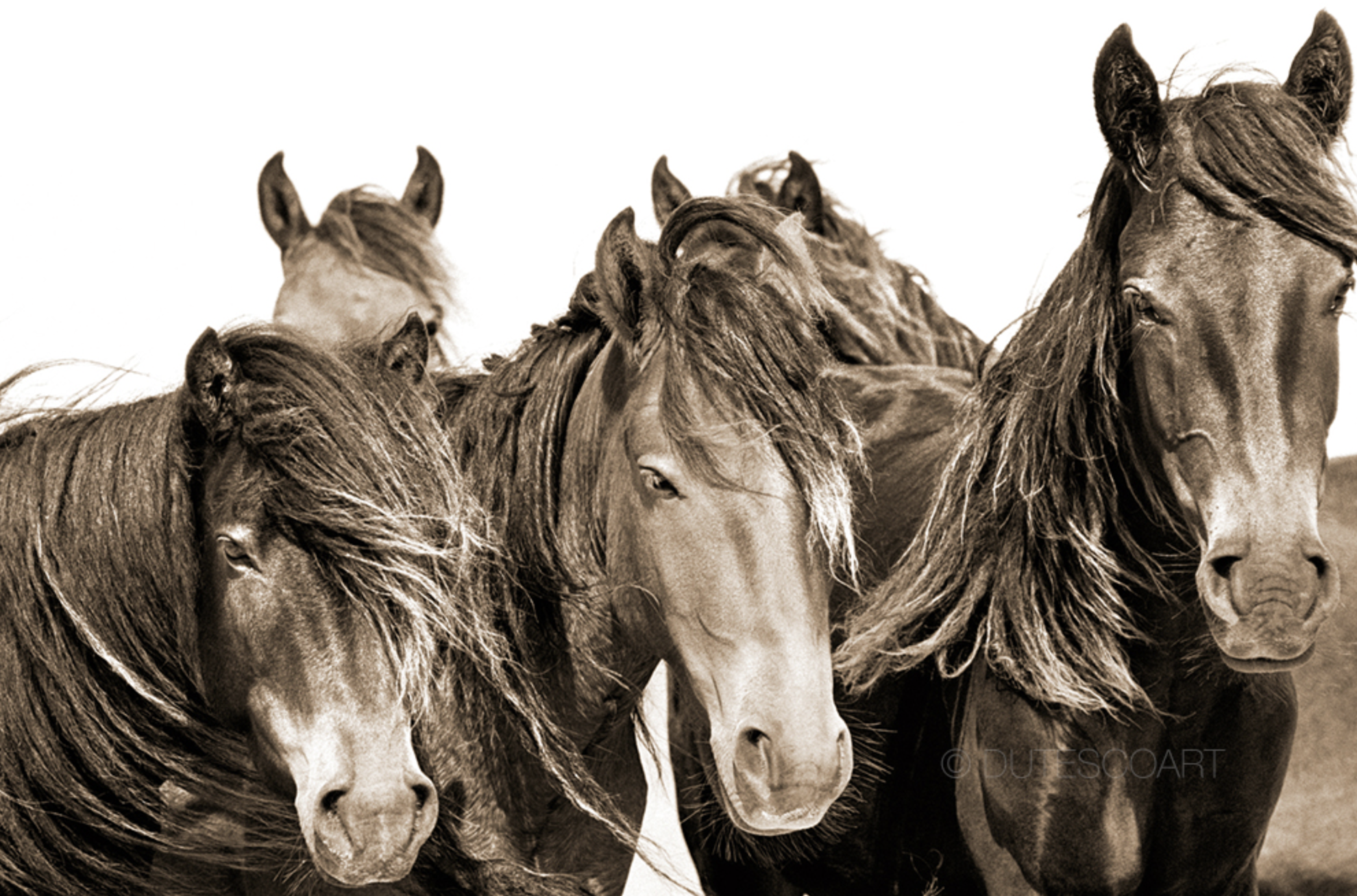
LCN by Roberto Dutesco
WHY VENICE
AN ELEVATING POINT OF VIEW
Average Elevation Above Sea Level
Sable Island: 3.3 feet/1 meter
Venice: 3.3 feet/1 meter
Manhattan: 10–50 feet/3–15 meters
We can all agree that, within our lifetime—and certainly within our children’s—sea levels will rise. Projected global sea levels may rise between 20 and 100 feet above today’s oceans. Most of Sable Island and Venice will be underwater, and many parts of New York City will follow.
Much of the wild beauty and many marvels humanity has created in such low-lying island regions face disruption and disappearance.
This exhibit is my homage to the horse—humanity’s oldest and most trusted ally—as seen through the wild horses of Sable Island, and a dedication to horses everywhere, with my enduring desire to protect all that is wild. What may happen to those wild horses may also happen to us, living only a few feet above sea level.
I invite you to see these images as visions of places that may cease to exist—images of the wild horses of Sable Island, situated some 300 km from Halifax, Nova Scotia, and approximately 500 km from the Titanic shipwreck. It is an island not fit for survival—neither for horses nor humans.
These photographs and film present a “lost world”—a place of beauty, fragility, tragedy, and love, where 500 horses, 500 shipwrecks, and 500 years of history collided, before the great meltdown likely to submerge this beloved island.
When the flood comes—and it will—humans will move inland, to higher ground. For the wild horses of Sable Island, there is no inland safety. Despite their centuries of resilience, they may vanish into the North Atlantic abyss, unless storms miraculously build more sand onto the island.
What comes next will affect not only the horses of Sable, but humanity everywhere—our children and their children. For their sake, we must care for this single place we all call home: Earth.
Humans and horses are interlinked into the future: these wild horses, your splendid Venice, my beloved New York, share the same predicament of disruption. Let us not blame. The time for blame has passed. It will take humanity’s brilliance to change what feels irreversible. Together, we can extend the future through innovation, resilience, stamina, vitality, adaptability, hope, and inspiration.
My mission as a photographer is not to become a conservationist. My mission is to make you see, perhaps with new eyes, the beauty before you and think differently about it. These images have inspired many over decades; now they come to Venice to inspire you. Echoing the Biennale’s thematic exploration of “In Minor Keys,” this exhibition highlights the power of quiet, resilient existence as a counterweight to global volatility.
Please enjoy these images as a vestige of things past—with the reminder that perhaps it is not too late to begin, to act, to turn away from our impending “apocalyptic climate future,” as described in 2025 by United Nations climate leaders. The best time to start, as the proverb goes, was 20 years ago. The second-best time is now.
So—are you in?
Roberto Dutesco
New York City, March 4, 2026
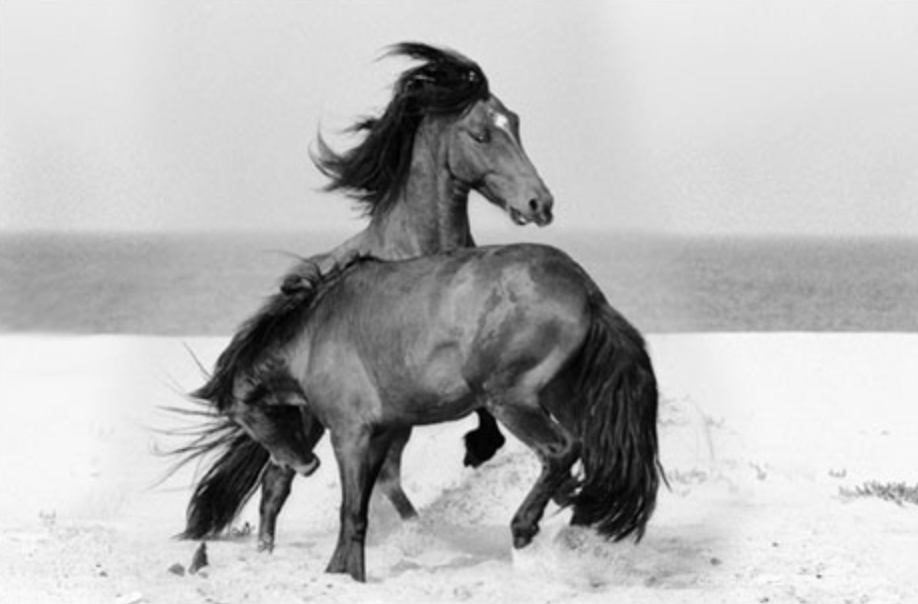
Fury by Roberto Dutesco
Venice Biennale curator Denis Curti shares his thoughts on Roberto’s work and why it holds a special place in this year’s Biennale.
“Only photography has succeeded in dividing human life
into a series of moments, each of which has
the value of an entire existence.” —
Eadweard Muybridge
Direct. Light. Elegant. Sinuous. These photographs are almost portraits. They are like jewels created in the absence of improvisation. The design intent is driven by a pressing rhythm dictated by the curiosity of an author in continuous search of a beauty without frills. I immediately felt that Roberto Dutesco’s shots did not win me over through the effect of astonishment, but through the surprising harmony they are capable of emanating. I also thought that Roberto manages to take photographs that closely resemble him; these sequences dedicated to wild horses are like a logbook—his own. Exhibiting them is an intimate, generous, and delicate gesture. Roberto is well aware that images are destined to change over time. Those photographs, which perhaps originally had a documentary flavor, are transformed today into precious notes on life. Within those prints, the landscape becomes sentiment. Form becomes pure emotion. In this way, his gaze stops searching for the real. It moves into the vibrant heart of stories and constructs a visual path capable of restoring a different sense to the things of the World. Roberto Dutesco’s photography invites us to rethink our own way of looking, proposing a sensory journey capable of rewriting the relational codes that intertwine reality. The presence of this project in Venice responds to precise coordinates.
Firstly, it ideally brings together two islands: the Venetian lagoon and Sable Island in Canada—the place where the author creates his images—creating a conceptual connection between separate spaces united by a condition of scenic and symbolic suspension. Secondly, the figure of the horse finds an almost propitious correspondence within the architectural frame of the city, re-emerging as a recurring sign in the decorations of St. Mark’s Square. These photographs, in both large and small formats, activate a reasoning that moves more on an evocative plane than an analytical one. Among all animals that live in close contact with humans, the horse represents an emblem of sensory freedom and wild strength. From a domesticated creature, it stands as a presence capable of preserving an irreducible independence: it manages to enter into a relationship with man without ever losing its primordial aura. It is a connection between anthropic desires and equine instinct that manifests because we recognize ourselves as individuals capable of producing action. Each of us, within our own heart, possesses the ability to choose, to yield to control, or to escape: it is the free will that allows us to build an existence that mirrors our authenticity. The strength of Dutesco’s work lies in the ability to keep this tension open. The images continue to evoke movement and vitality even when removed from the original context of the shot: the horses remain immersed in an insular dimension, in a mental "elsewhere" that is not exhausted by their mere iconographic representation. Frame after frame, the author moves away from the obsessive search for intellectually complex reflection. His ambition is to produce a type of art that functions as an emotional device. For him, taking a photograph becomes a form of mindfulness of the gaze. His images are carved into the collective imagination, transcending the completion of perception to transform into an inner experience.
Denis Curti
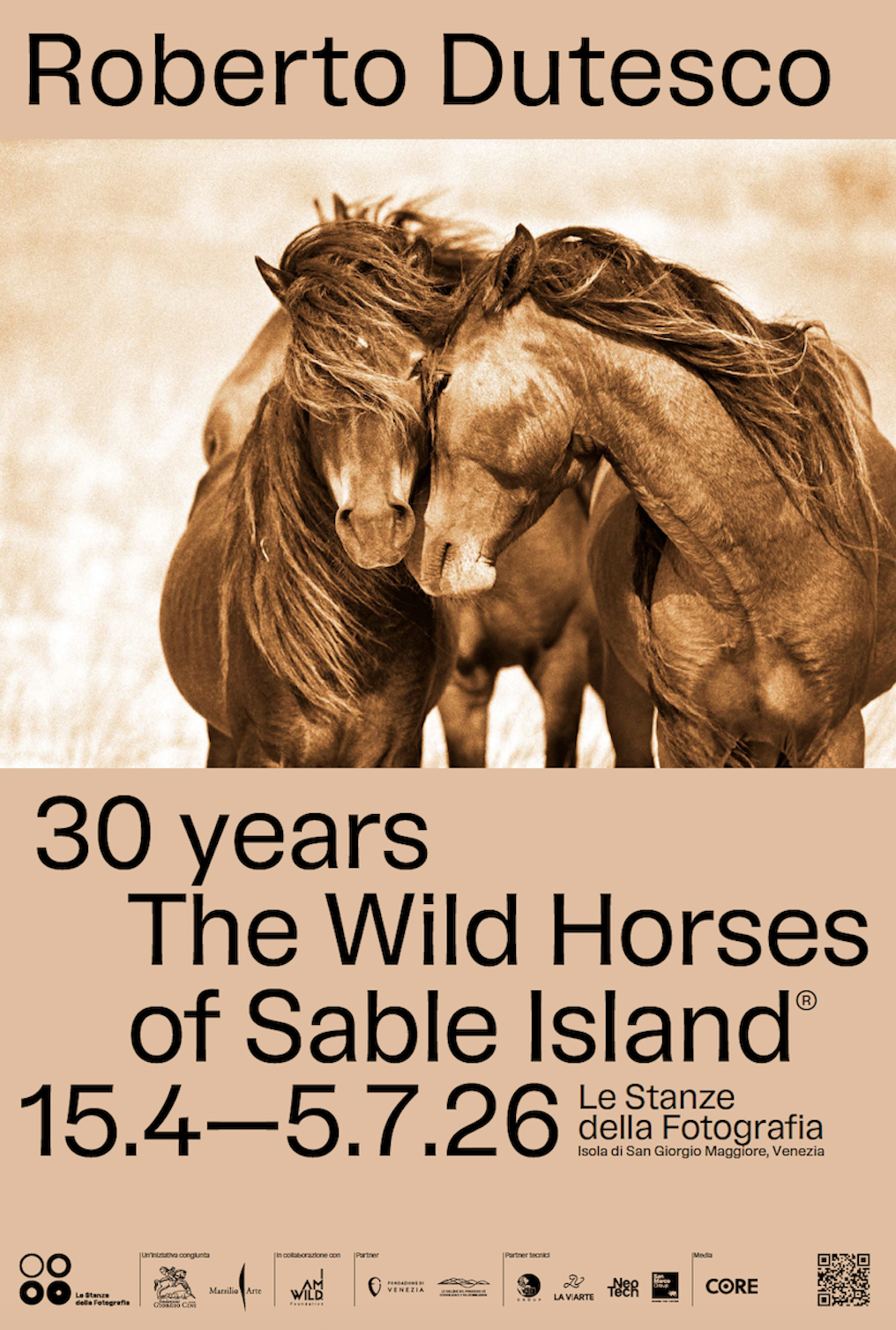
We hope you can come and see the wild horses of Sable Island.
Roberto’s photographs and poetry are featured in the HYMN edition.