The Forms of Origin
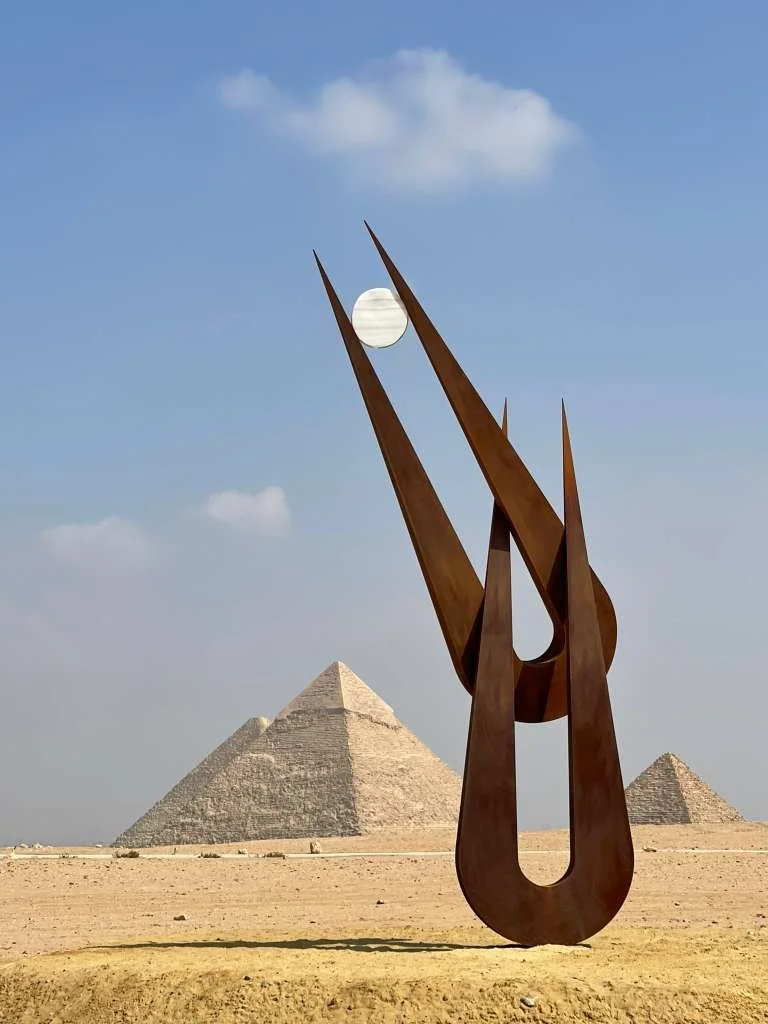
Spirit of Hathor by Natalie Clark. Image courtesy of the artist
AN EXCLUSIVE INTERVIEW WITH SCULPTOR NATALIE CLARK
BY SUKIE SMITH
Natalie Clark studied sculpture at Brighton University at a time when the YBA’s (Young British Artists) were beginning their takeover of the British art world. After completing her Bachelor of Arts, she was offered a scholarship to continue her studies in fine arts at the School of the Art Institute of Chicago.
Observing how women sculptors were being sidelined in the UK, she moved her studies to America. This no-nonsense, pioneer attitude has afforded her a global career, and she now works out of two studios, one a repurposed Mormon Church in the Tetons and the other a 13th-century masia in the Catalonian foothills north of Barcelona. She thinks and works with wide-screen, large-scale vision in a variety of mediums, including marble, steel, natural materials, ceramics, and snow. I spoke to her on a recent trip to London during a massive heat wave, and I wished we were actually inside one of her marble or snow pieces.
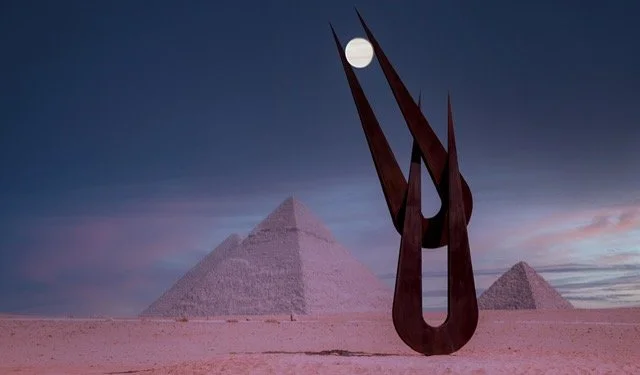
Spirit of Hathor by Natalie Clark Image courtesy of the artist
SUKIE SMITH Can you talk about the title The Forms of Origin? It's a beautifully complex statement.
NATALIE CLARK All of these collections of work, including Scenes from the Garden of the Universe and The Rape and Resurrection, are explorations, journeys into my psyche as a female artist of a certain age. The Forms of Origin thinking is about the feminine divine, the way it feels and looks, not in a male gaze objectified way but in an authentic version of what the curve, the flow, looks and feels like as a woman, and translating that into the hard crystalline stone of marble; hard/soft beauty coming from my core and life experiences as a woman and female artist.
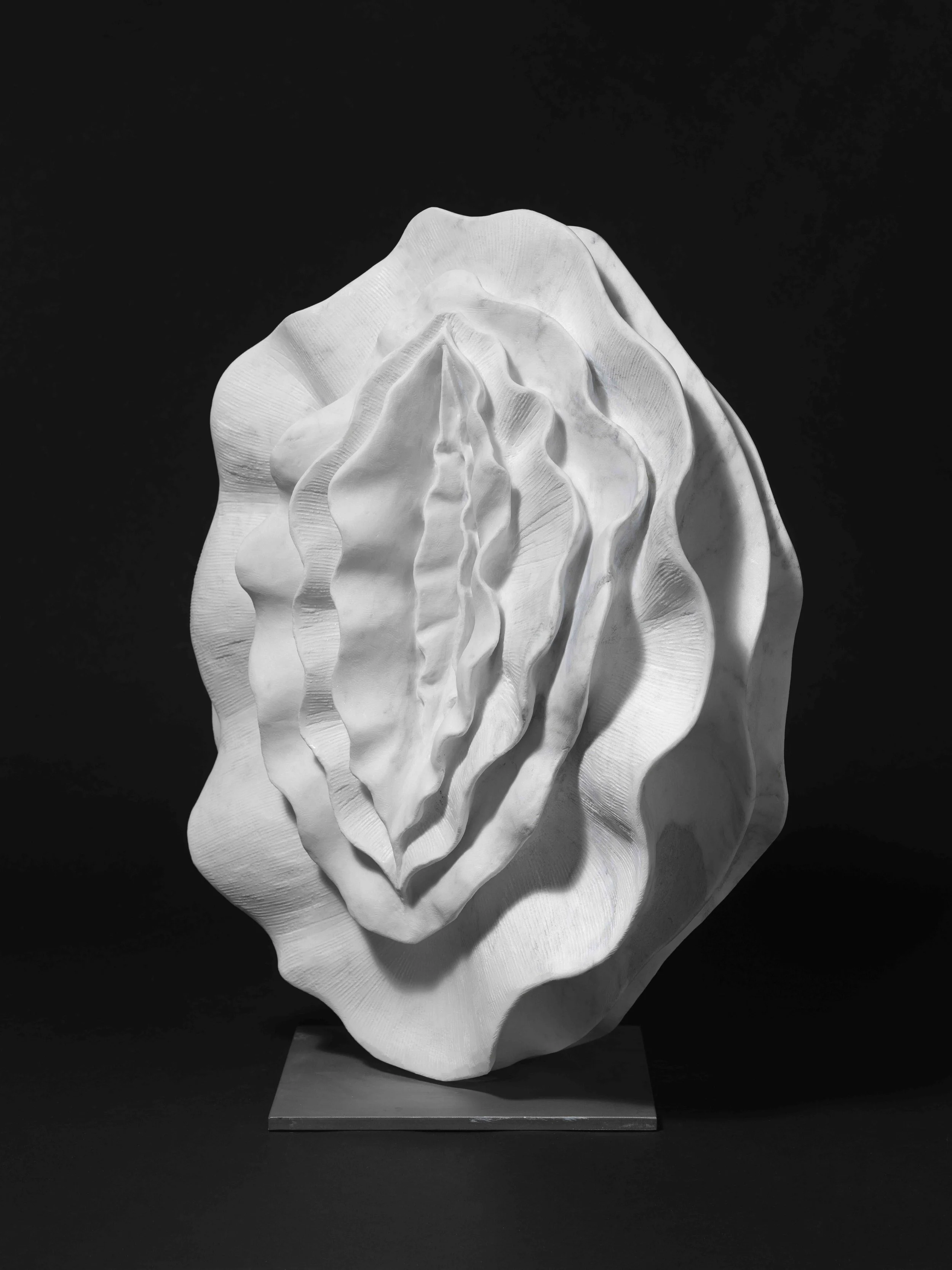
Kali by Natalie Clark. Image courtesy of the artist
Moving onto The Scenes from the Garden of the Universe, I'm delving more into the mystic part of the soul, using Rumi's sublime poetry as an inspiration to manifest universes tied into nature and iconic symbols, taking the idea of the artist as divinator with one hand touching the earth and the other the heavens and using myself as the lightning rod to give birth to these creations.
In Rape and Resurrection, the poetry and dialogue continue, but this time the question is: is the extraction - the rape of the earth that happens when we pull materials from the earth and, in this case specifically Carrara marble, does that act become justified by the formation of the new piece sculpted by the hands of the artist?
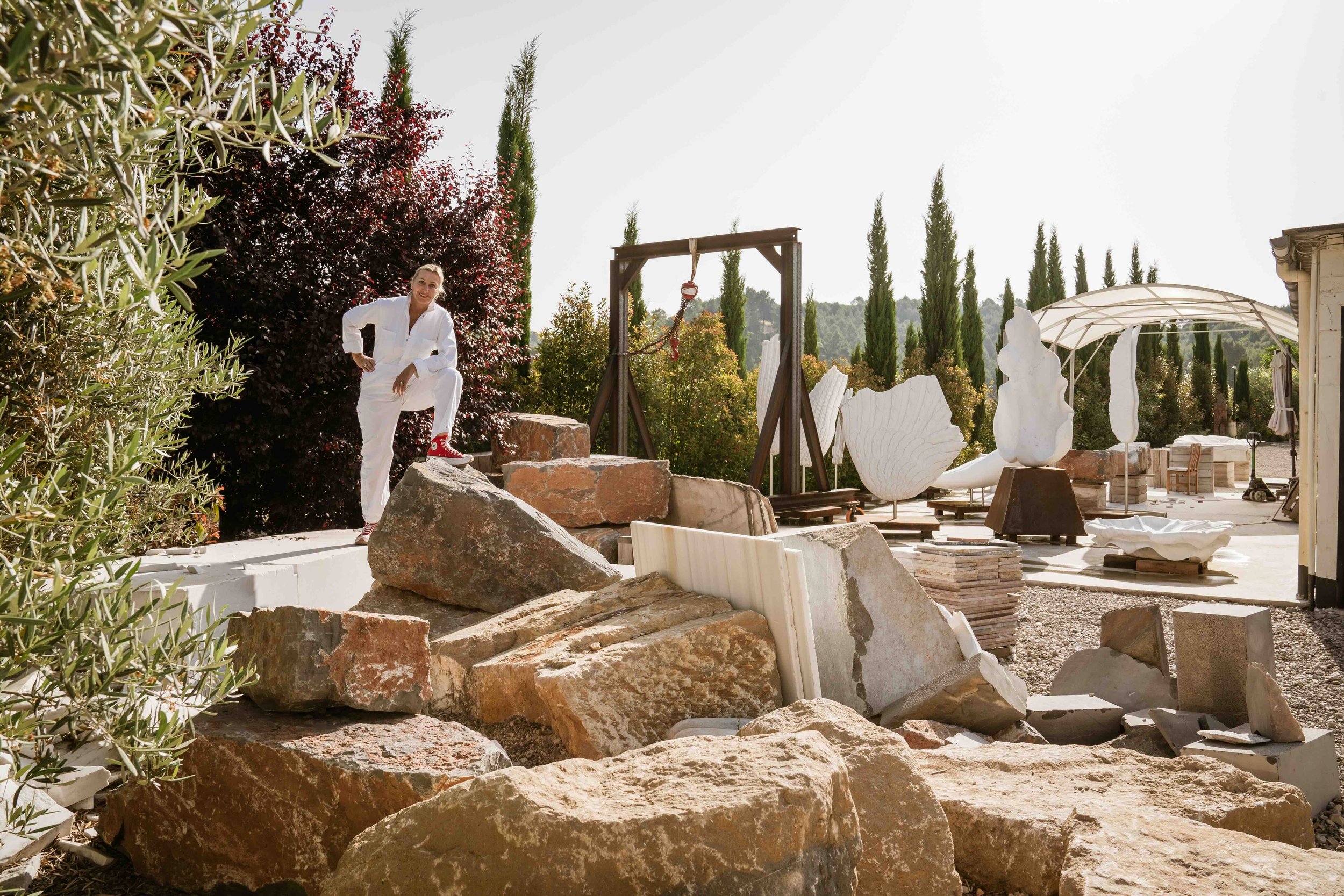
Natalie Clark Photo by Cristina Pratt Casanova courtesy of the artist.
SS How did the relatively new understanding about the events that occur during conception (the knowledge that a womb selects a sperm and that on conception the zinc spark is observable) influence your recent creative process?
NC Well, it just confirms women are the creators, and we are the ones who choose.
SS What are the first things you notice when you travel to somewhere new, and what are your points of recognition?
NC The smells and ambient sounds that can be either familiar or totally alien, appealing or totally repulsive.
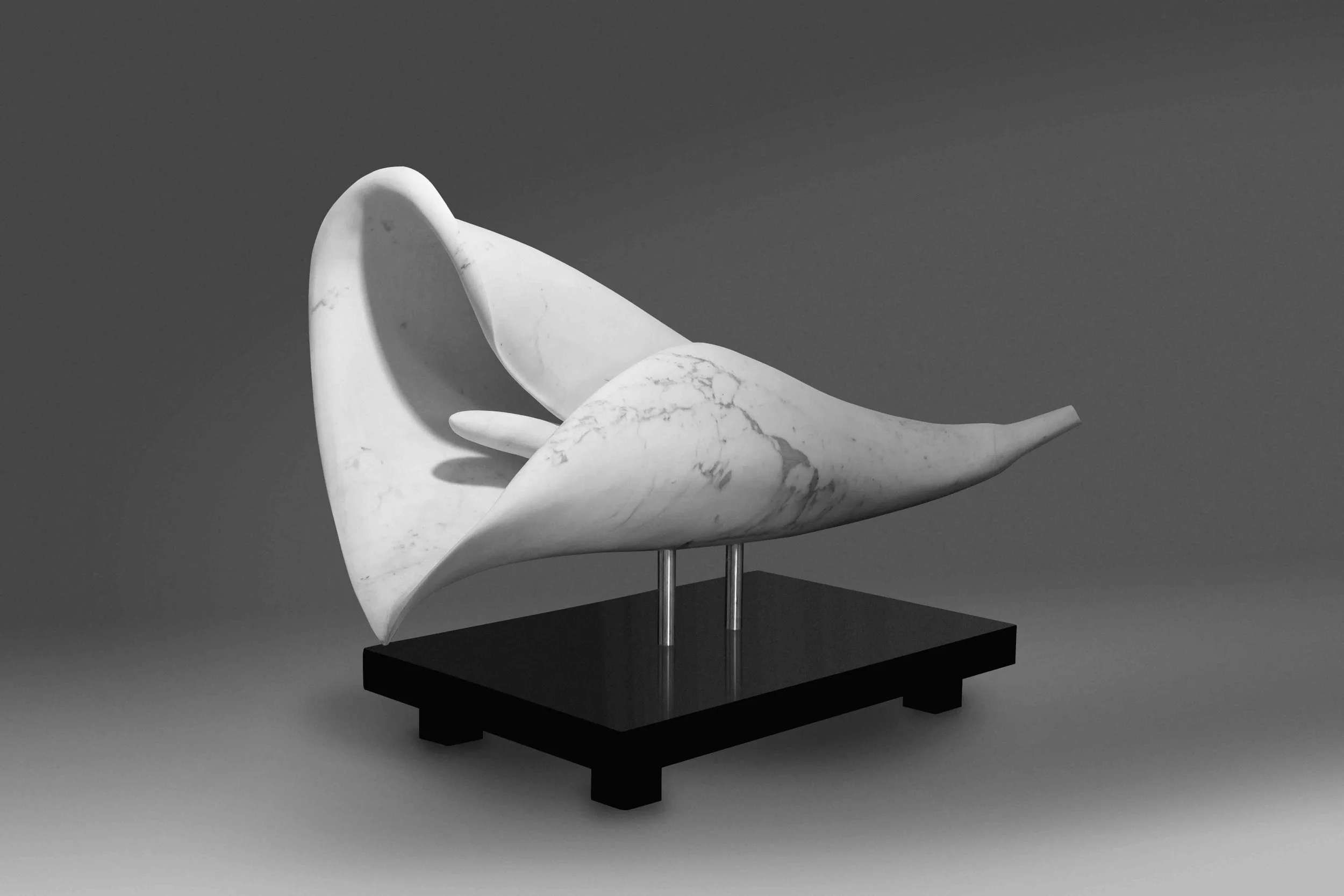
'Calla' by Natalie Clark. Carrara marble & steel. Photo by Cristina Pratt Casanova, courtesy of the artist.
SS Your work brings hidden internal structure and mined materials to the surface. What are you consciously unearthing?
NC Truth and authenticity, well, trying to at least with The Forms of Origins, where those organic forms were translated into Carrara marble. For me, marble holds a timeless presence; formed deep within the earth, its geological memory becomes inseparable from the ideas I explore about creation, origin, and our place in the universe.
It connects the extraction of marble from the mountains of Carrara with my own experience of trauma, asking whether healing can emerge through making. I do not separate the violence done to the earth from the wounds we carry; instead, I acknowledge my role in that extraction, recognising the paradox of creating beauty from forcibly removed material. In this way, the work becomes both an act of responsibility and creation, like Dante's ascent through Paradiso, where the soul moves toward divine light through understanding and grace. I hope these sculptures and films suggest that transformation is possible—that by confronting personal suffering and our relationship with the natural world, we may find a path toward renewal, compassion, and resurrection.
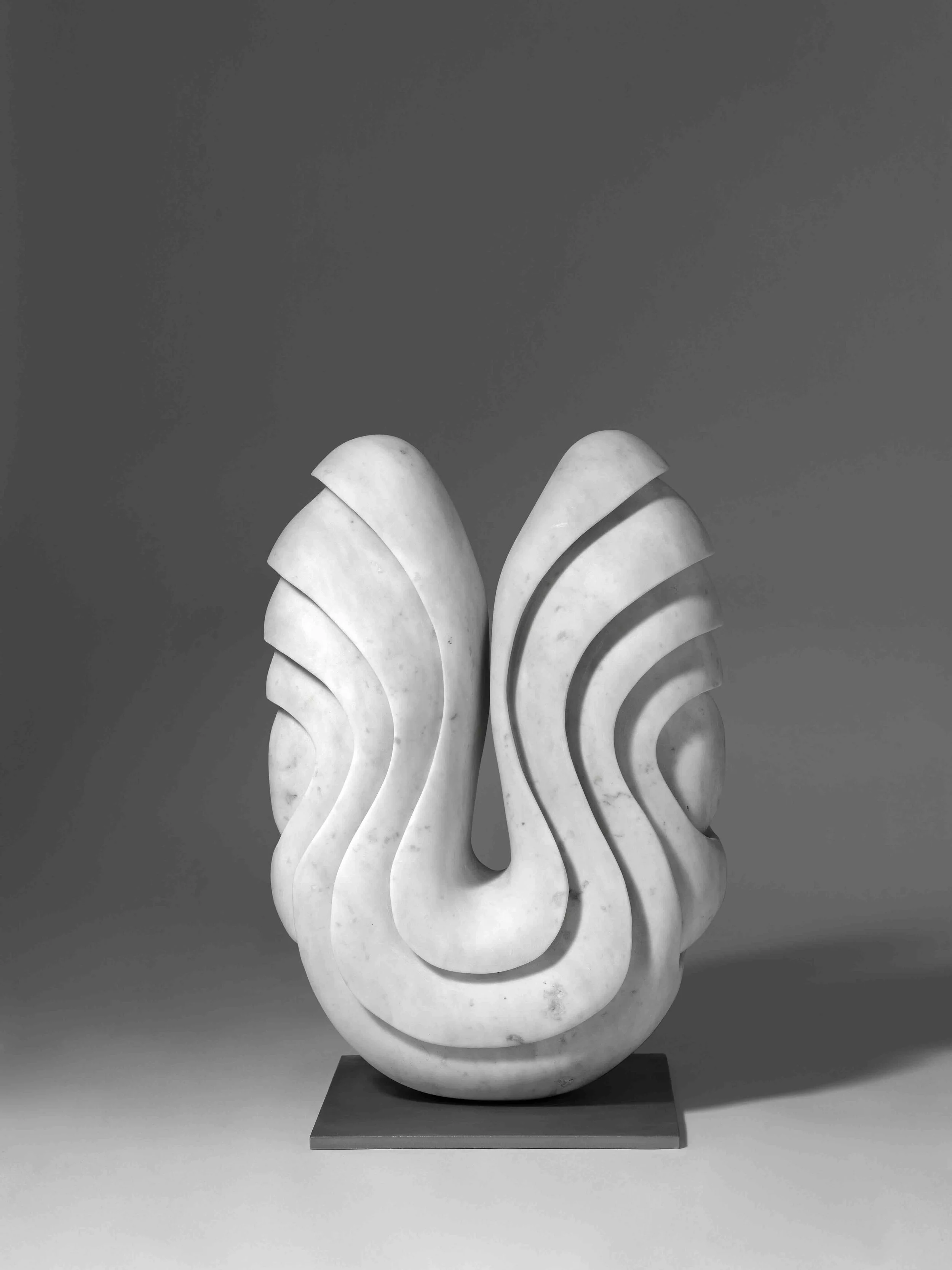
Anjea by Natalie Clark. Image courtesy of the artist.
SS What's your favourite power tool?
NC Anything that vibrates ha!!!
SS How important is apparel to you? Some of your sculptural work is wearable as silver cuffs with fluid and anatomically referenced shapes. Looking at them, they feel protective and symbolic of female power. Is that correct?
NC Yes, totally, they come from the series Forms of Origins, which is a deep exploration into the feminine divine and wanting to create amulets, sculptural adornments, sculptural jewellery, working with pure silver and gold and gems as opposed to marble, steel and bronze, finding the flow and curve found externally and internally in the female psyche and form.
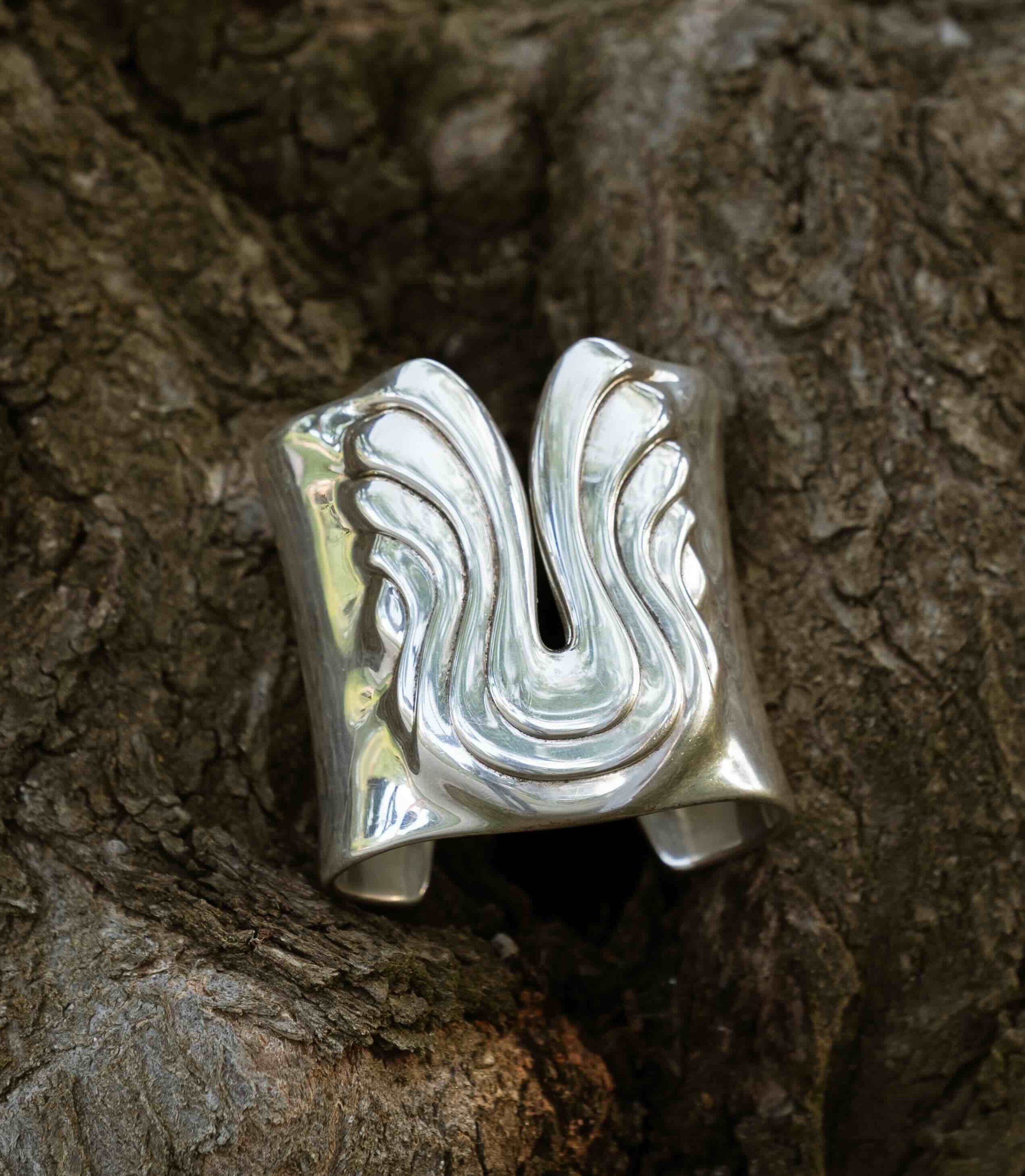
Anjea silver cuff by Natalie Clark. Photo by Cristina Pratt Casanovaj, courtesy of the artist.
SS When we use the word form, what happens in your head?
NC In the practice and language of sculpture, the word "form" is central, I use it repeatedly in both titles, such as Forms of Origin, and in the literal physical sense of sculpting a "form".
In my sculpture, abstract shapes inspired by natural forms and growth patterns, seeds, fertility, landscapes, and biological structures appear.
In The Forms of Origin, I'm exploring the feminine divine, sacred geometry, and the story of life expressed through three-dimensional sculpture.
Works that I've titled Gaia, Vesta, Kali, Iris, and Minerva suggest mythological and spiritual figures, with the forms functioning as symbolic embodiments rather than literal representations.
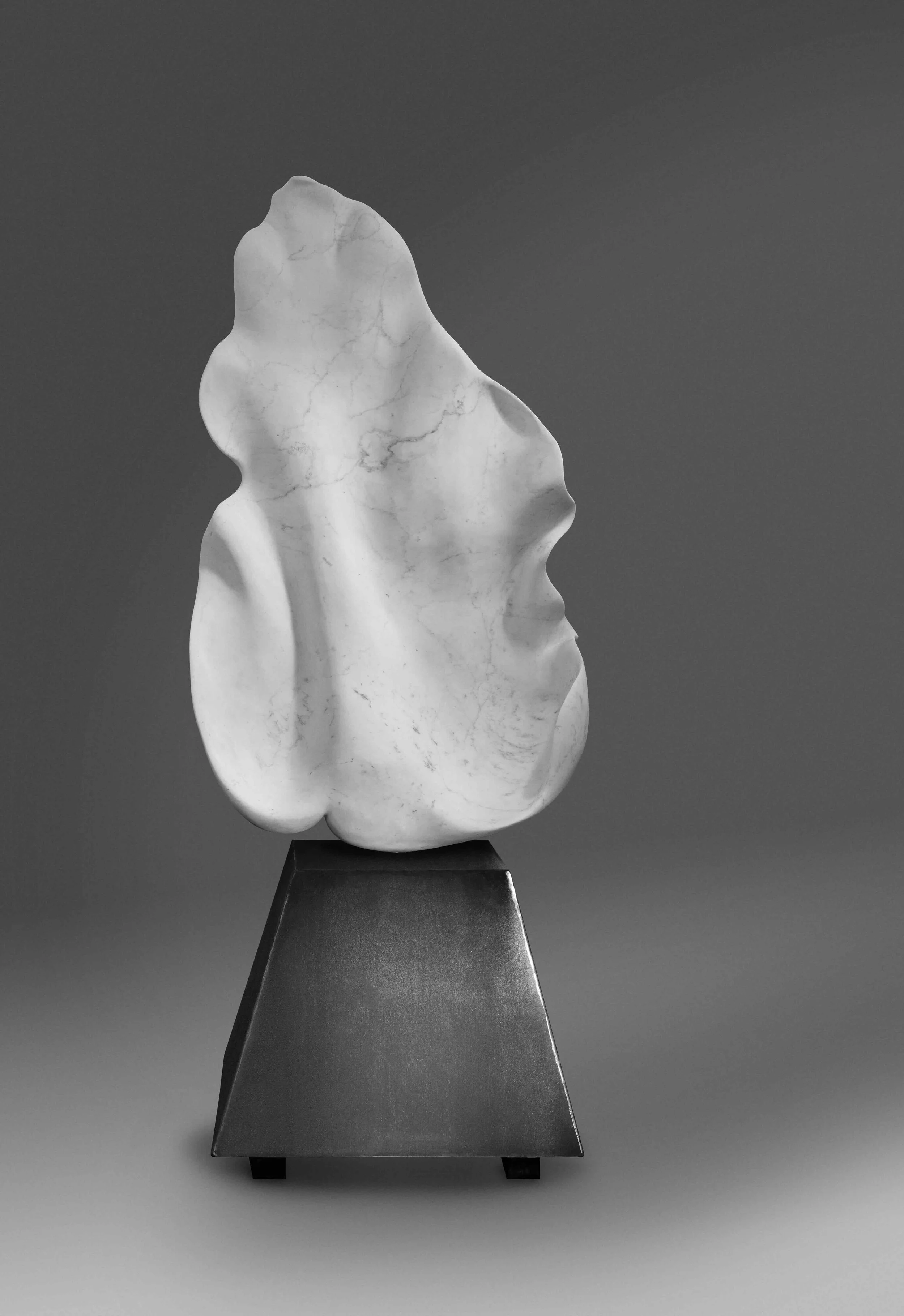
Amatory by Natalie Clark. Carrara marble and steel, photo by Cristina Pratt Casanova courtesy of the artist.
My understanding of "form" is not simply about shape or geometry. It points to the underlying essence of things—the generative structures of nature, spirituality, and human experience. The abstract curves and volumes are intended to evoke ideas and emotions rather than depict specific objects.
very laboratory