Three Photographers, Three Visions
Conceived by Ellen De
Three Photographers, Three Visions: Through their lenses, Leslie Estrada, Ray Vázquez, and Ellen De explore the interplay of the visible and invisible, the tangible and elusive. Each brings a unique perspective to the way in which light, form, and space transform the formless into something we can see, feel, and understand.
Separated by continents - Leslie and Ray rooted in the Americas, Ellen De in Europe - these artists prove that distance is no barrier to a shared dialogue on form, light, and perception. Together, their work becomes a narrative of how art bridges the gap between what we perceive and what lies beyond perception.
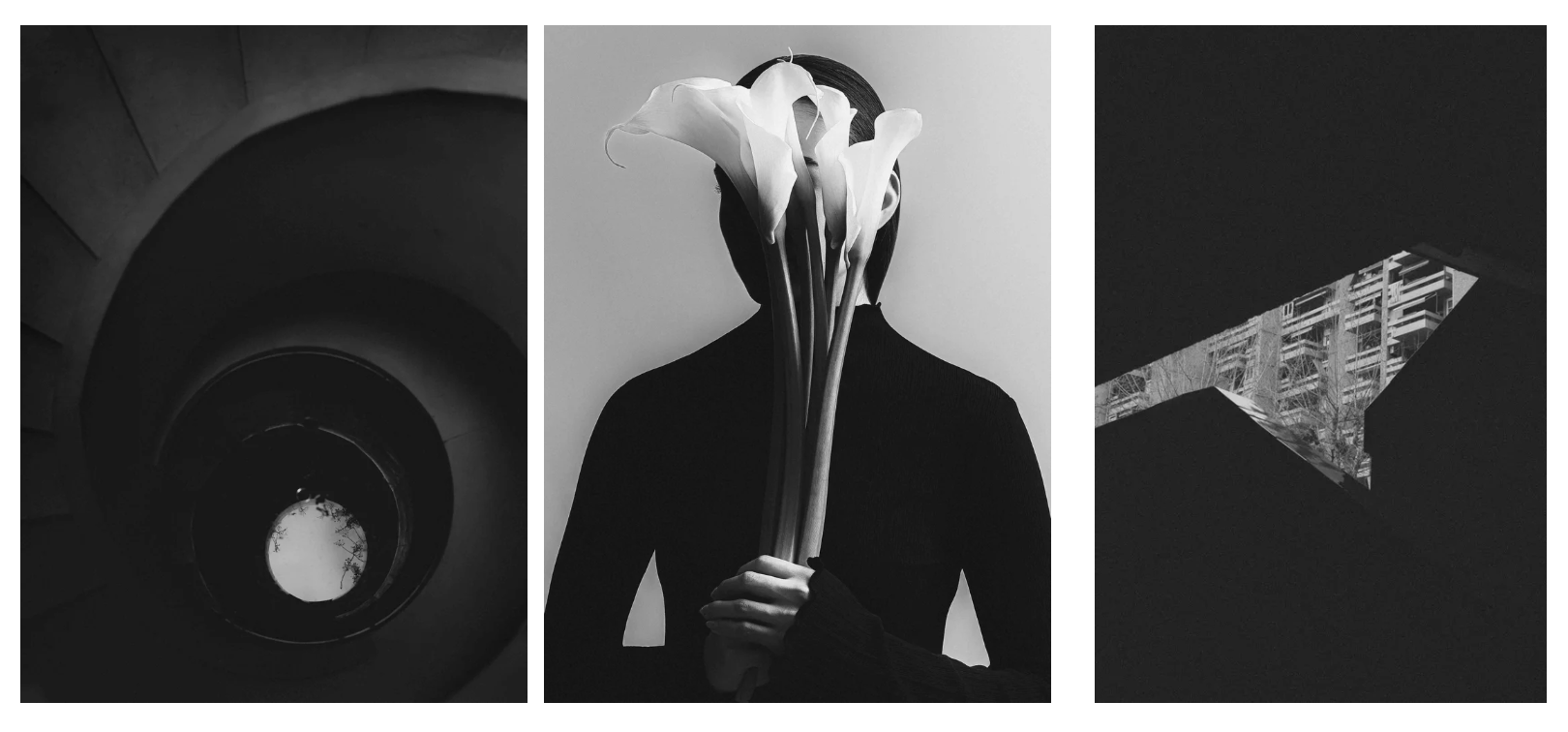
L to R: In Void and Form 07 by Leslie Estrada, Vessels 03 by Ray Vázquez, Rear Window by Ellen De
The Shape of the Soul, the Body of the Elusive: A duality governs our perception of the world: the tangible and the elusive. While some elements of life are immediately apparent, others exist in forms that evade our direct senses. Yet, even the unseen and formless find expression in shapes and bodies that allow us to grasp them—transforming the ephemeral into something we can experience. This interplay is not a process of creating meaning, but one of revealing it, of making the unseen seen.
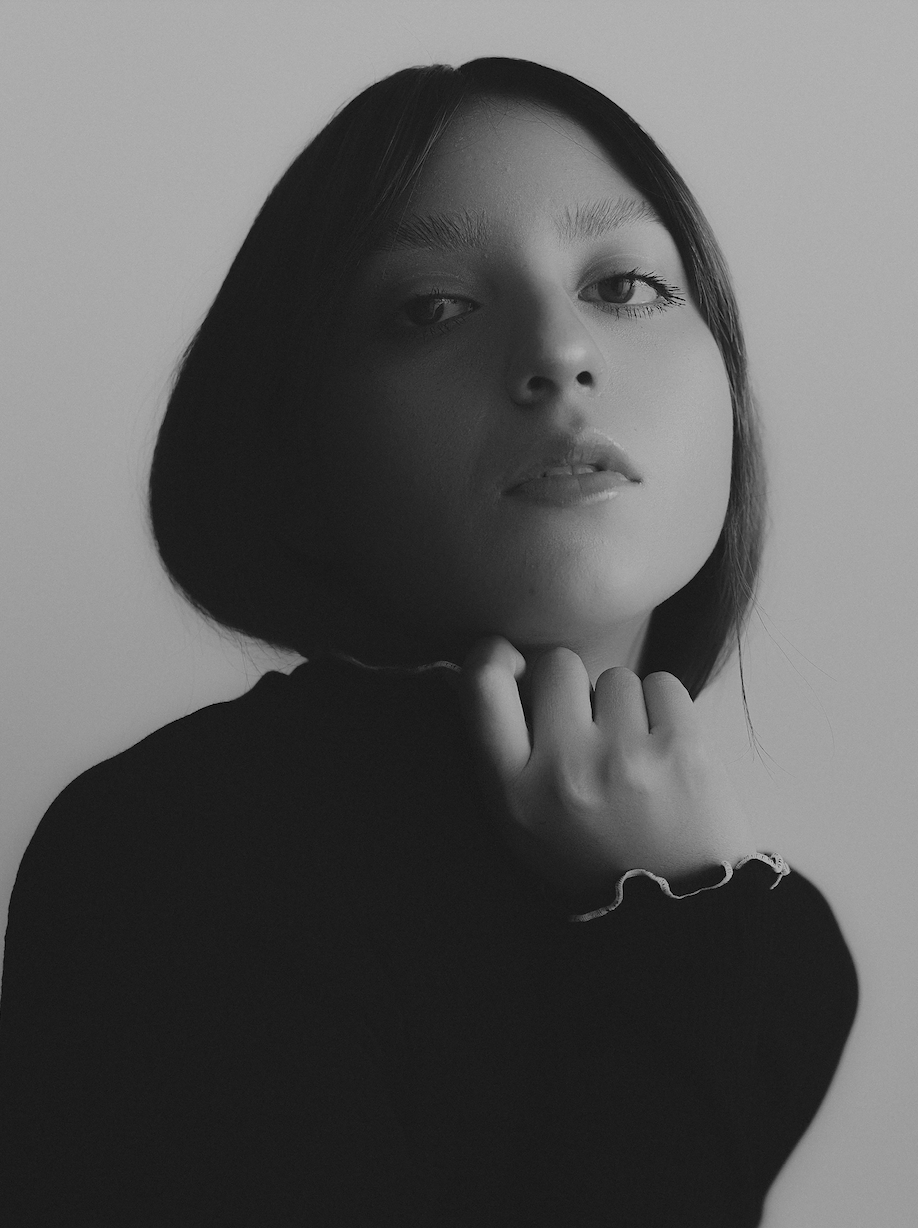
Portrait of Leslie Estrada
Leslie's meditative reflections on void and form offer a poetic starting point for this exploration. In her words, "We are given space to process, to listen to our intuition. We become more in tune with our formless souls. Here, the interplay of light and shadow does more than carve shapes from visual chaos; it reveals something deeper: a moment of stillness, a tactile connection to memory and intuition. Through the shaping of space, light gives our intangible inner selves a medium of expression—a silhouette in the void. The intangible becomes something we can see and feel, even if only fleetingly, in the interplay of light and shadow.
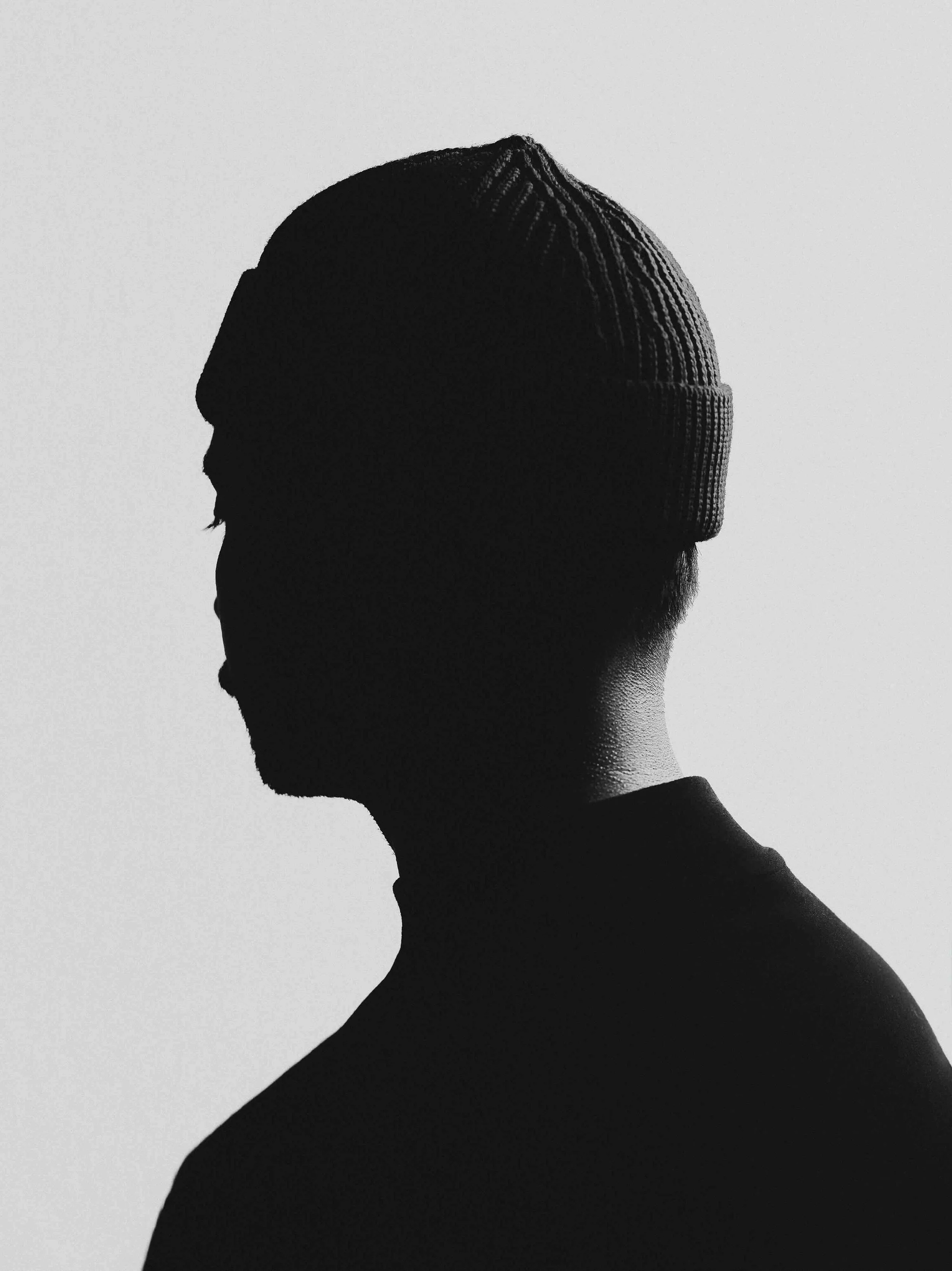
Portrait of Ray Vázquez
Similarly, in Let There Be Light, Ray Vázquez underscores the omnipresence of light as a force that, while formless itself, shapes all that it touches. "Light has no form, but it gives form and shape to everything it touches when it passes by." It is in this transformative act that the invisible becomes visible. Light acts as a bridge, a medium through which the intangible gains definition. What we perceive in the physical world is, in essence, light's narrative-a language that speaks in shadows, textures, and reflections. Without light, the formless would remain elusive; with it, the intangible takes shape, speaking to our deepest senses and emotions.
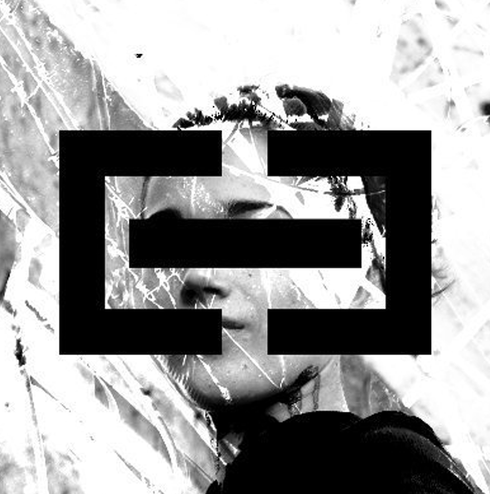
Portrait of Ellen De
Ellen De’s Neo-Brutalism series strips architecture of its contextual and historical narratives, reimagining brutalist structures as sculptural forms suspended in time. Her focus is on the purity of form: the dialogue of straight and curved lines, light and shadow, and the sculptural essence of space. By isolating these elements, Ellen De transforms the utilitarian into the abstract, creating compositions that teeter between dream and dystopia. The original meaning of the architecture she captures is eroded, leaving behind an emotional resonance of alienation and contemporary decay. Spectres of a past which contained ideals for the future.
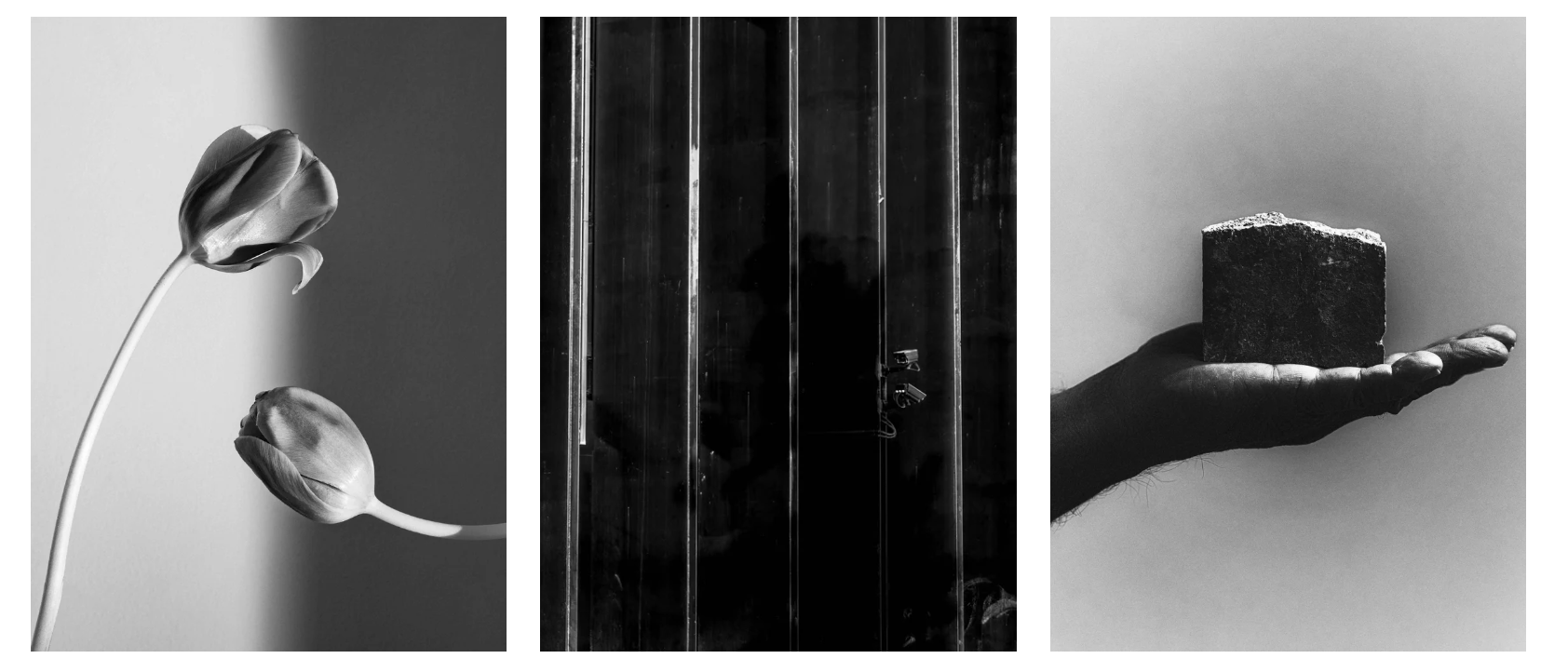
L to R: In Void and Form 06 by Leslie Estrada, NEO BRUT 01 by Ellen De, Let there be Light 011 by Ray Vázquez
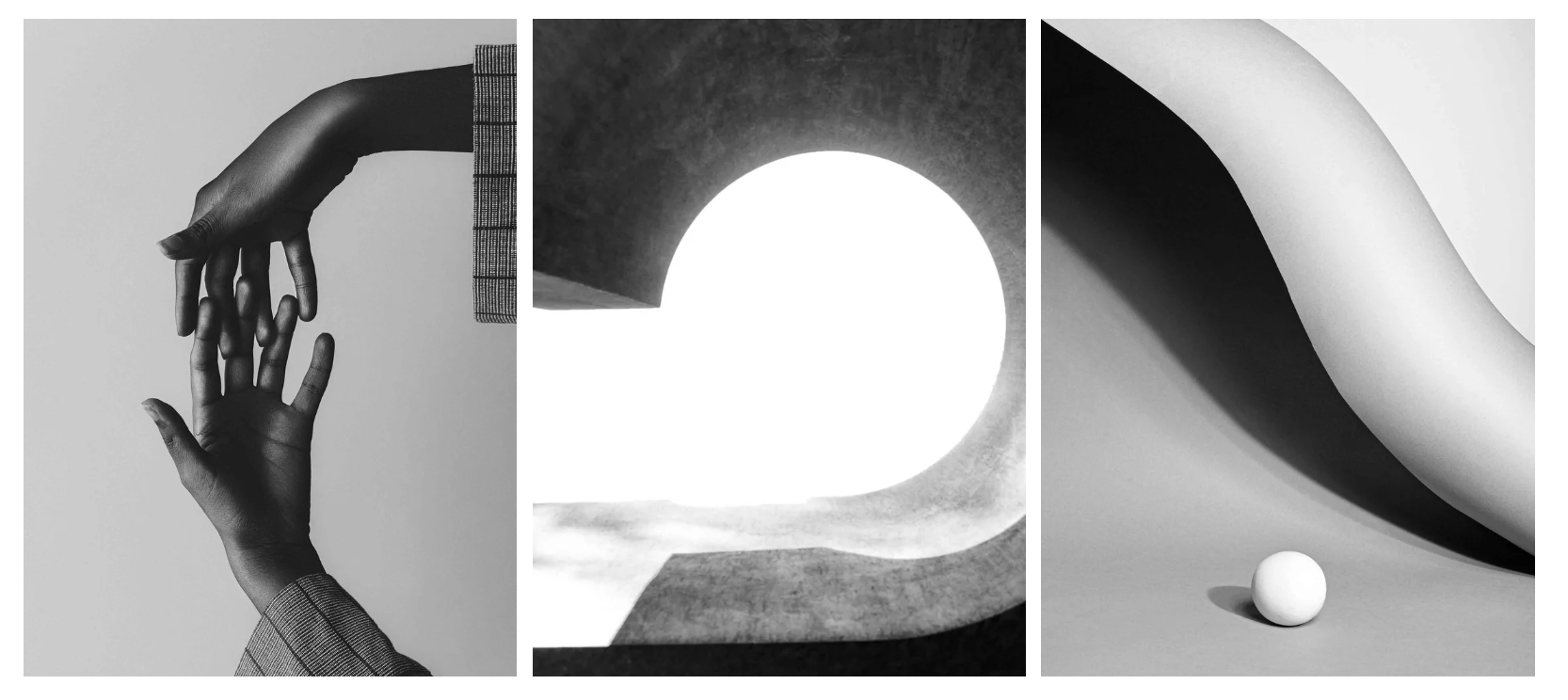
L to R: Let there be Light 04 by Ray Vázquez, Avoidance by Ellen De, In Void and Form 02 by Leslie Estrada
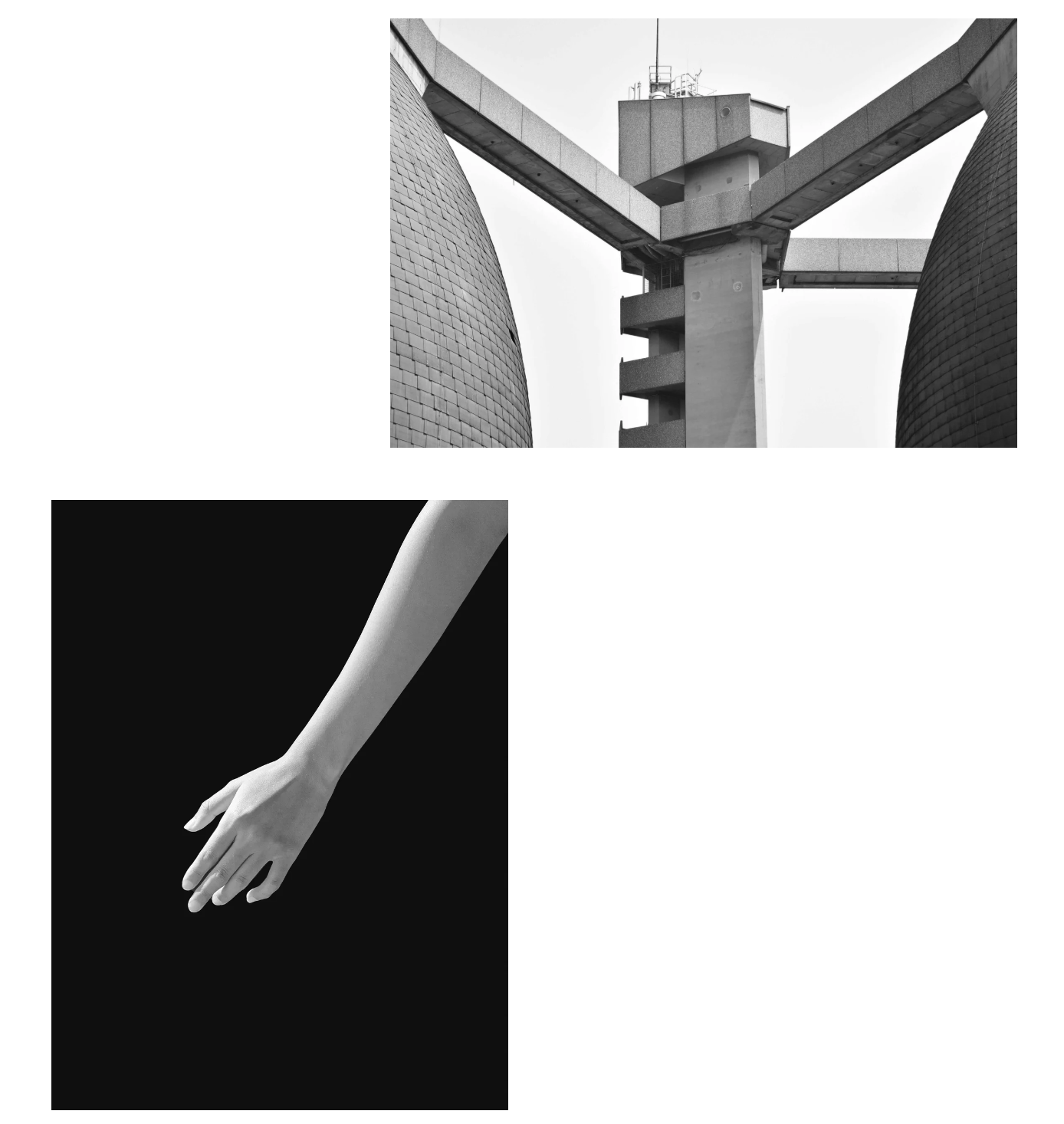
Top: NEO BRUT 15 by Ellen De
Bottom: In Void and Form 08 by Leslie Estrada
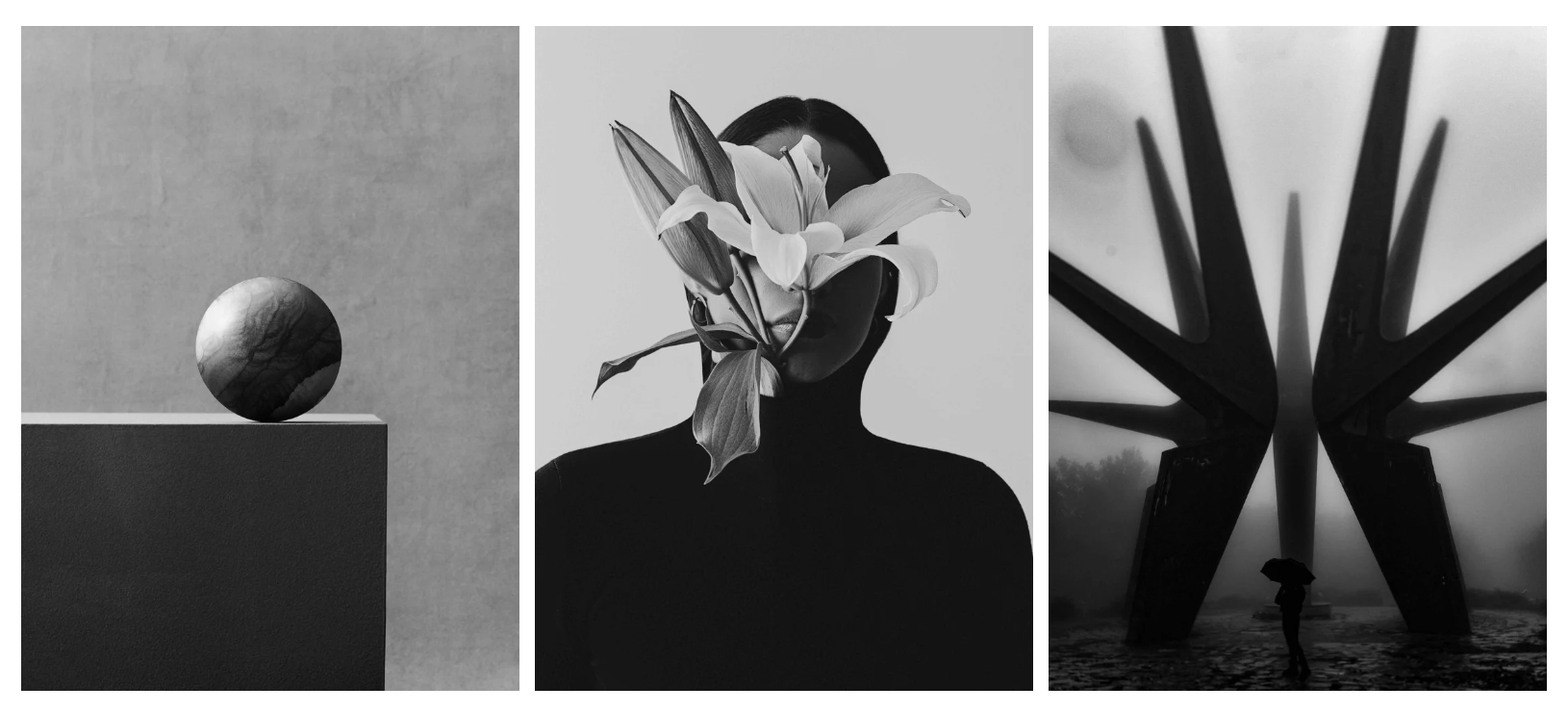
L to R: In Void and Form 01 by Leslie Estrada, Vessels 02 by Ray Vázquez, Avoidance by Ellen De
At their core, these artists remind us that form is the medium through which the soul speaks. The ephemeral—the soul, light, memory, emotion—gains expression not through words, but through the interaction of elements: light, shadow, space, and form. It is in this translation that we find meaning. Leslie's stillness, Ray's light, and Ellen De's abstraction all converge to demonstrate that the body of the intangible is not fixed; it is ever-changing, fluid, and deeply personal.
Ellen De, Leslie Estrada & Ray Vázquez are featured in FORM vol.I.
very laboratory